
Archaeologists Uncover Remains of a Major Coptic-Era Settlement in Kharga Oasis, Including Churches, houses, and a Rare Christ Healing Mural
In a major archaeological breakthrough, an Egyptian mission from the Supreme Council of Antiquities has uncovered the architectural remains of what is believed to be the main residential city of Kharga Oasis during the formative years of early Christianity in Egypt. The discovery, made at Ain al-Kharab, within the Islamic and Coptic archaeological zone of Kharga in Egypt’s New Valley Governorate, offers rare insight into the country’s religious transformation from paganism to Christianity.
“This discovery reflects the richness and diversity of Egyptian civilization during pivotal moments of its history,†said Sherif Fathy, Egypt’s Minister of Tourism and Antiquities. He emphasized the importance of the find in deepening our understanding of Egypt’s religious shifts, adding that it “highlights the country’s legacy of tolerance and cultural diversity.†The minister praised the efforts of the Egyptian archaeological teams and reiterated the government’s full support for missions operating across the country. “The work of Egyptian teams is central to reaffirming Egypt’s place on the global cultural tourism map,†he stated.
Dr. Mohamed Ismail Khaled, Secretary-General of the Supreme Council of Antiquities, called the discovery especially significant as it sheds light on the beginnings of the Coptic period in Egypt, a crucial historical phase often overshadowed by its pharaonic and Greco-Roman predecessors. “This site offers a unique glimpse into the early Christian communities that once thrived in the Western Desert,†he said, stressing the historical role of Egypt’s oases as vital centers of religious and social life across centuries.
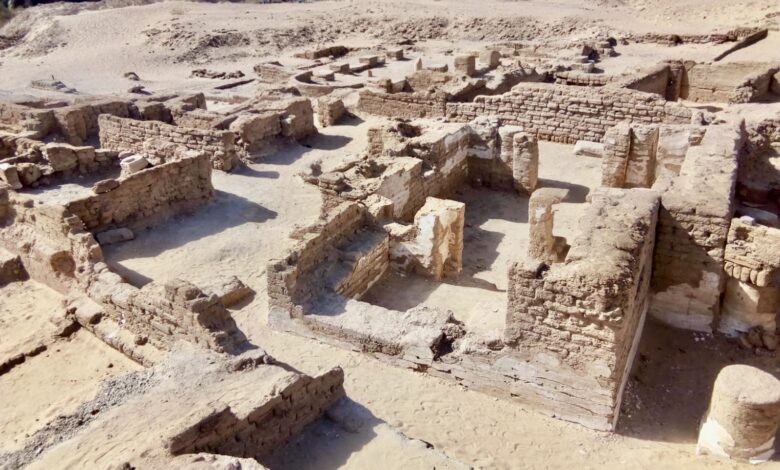
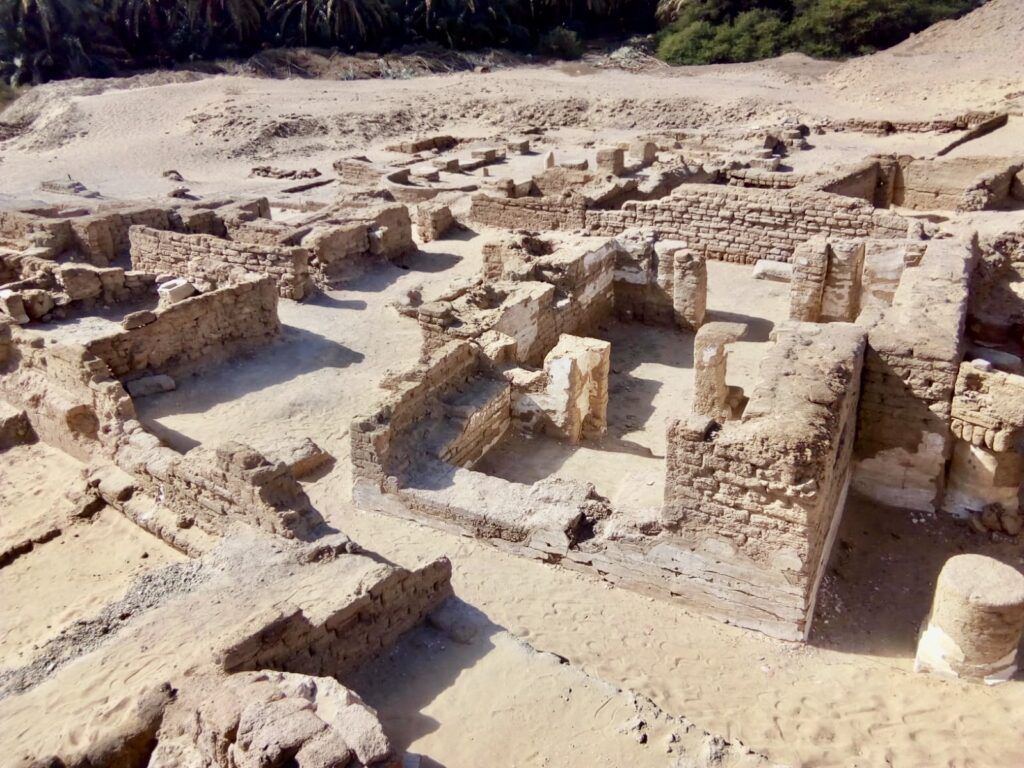
The archaeological mission uncovered an entire settlement composed of residential structures built primarily from mudbrick, some with walls still bearing traces of original plaster. These domestic buildings included multiple-room homes, communal ovens used for daily tasks, and storage facilities fitted with large ceramic jars embedded into the earth, evidence of food and grain preservation practices. Scattered throughout the site were dozens of artefacts that bring everyday life in early Christian Kharga vividly into focus.
Archaeologists recovered numerous inscribed ostraca, fragments of pottery vessels of various sizes, and intricately crafted items made of glass and stone. A number of burials were also documented, offering future potential for bioarchaeological analysis. However, the most striking find was a well-preserved mural depicting Christ healing a sick person, a rare and evocative example of early Christian art in Egypt’s desert frontier.


Dr. Siham Ismail, Director-General of Antiquities in Kharga and head of the excavation, highlighted further architectural discoveries at the site, most notably the remains of two churches. The larger of the two is a basilica-style structure constructed from mudbrick and featuring stone foundations that delineate a central nave and two side aisles, separated by three square pillars on either side. South of the main sanctuary, a cluster of service chambers suggests the presence of monastic or community functions connected to the church.
The second church is more modest, laid out in a rectangular plan and encircled by the remains of seven external columns. Parts of the interior walls retain Coptic inscriptions, and to the west of the structure, the mission documented the remnants of additional service buildings.
Dr. Ismail noted that the overall architectural layering indicates that the site was in use across several distinct historical periods. Structures first erected during the Roman period were later reused during the early Christian era, and continued to serve functional purposes well into the Islamic period, reflecting the fluidity and endurance of settlement in the Western Desert.
This discovery adds a vivid new dimension to our understanding of Egypt’s Coptic heritage, emphasizing the oasis not just as a place of survival, but as a living, evolving space of worship, artistry, and social continuity. As Dr. Khaled concluded, “This is more than a city—it is a testimony to the spiritual and cultural resilience of Egypt’s desert communities.â€
#Egypt #Christianity #Archaeology