
New Light on Temple Function and Third Intermediate Period Tombs
A joint Egyptian-French archaeological mission working at the Ramesseum—the memorial temple of Ramesses II on Luxor’s West Bank—has uncovered a series of striking discoveries that are shedding new light on the complex religious, administrative, and social functions of one of ancient Egypt’s most iconic temples.
The mission, which brings together experts from Egypt’s Supreme Council of Antiquities, France’s National Center for Scientific Research (CNRS), and Sorbonne University, revealed tombs from the Third Intermediate Period, extensive storage facilities for oils, honey, fats, and wine, and evidence of workshops, kitchens, and bakeries—remnants of a once-thriving temple complex that functioned as more than a religious site.
In a finding described as “exceptional†by the excavation team, archaeologists also uncovered the remains of a Per Ankh, or “House of Life,†a temple-based educational institution. Rarely found in situ, the Ramesseum’s House of Life included school texts, drawings, and what appear to be ancient learning tools, marking the first definitive evidence of formal education within the temple walls.
“The discovery not only confirms the presence of an educational institution,†said Dr. Mohamed Ismail, Secretary-General of Egypt’s Supreme Council of Antiquities, “but it also opens new perspectives on the role this temple played in the daily life and intellectual culture of ancient Thebes.â€


Nearby, archaeologists located administrative buildings on the temple’s eastern side, while studies of the northern sector identified vast storerooms once used to house olive oil, honey, and animal fats, as well as wine cellars replete with labeled amphorae.
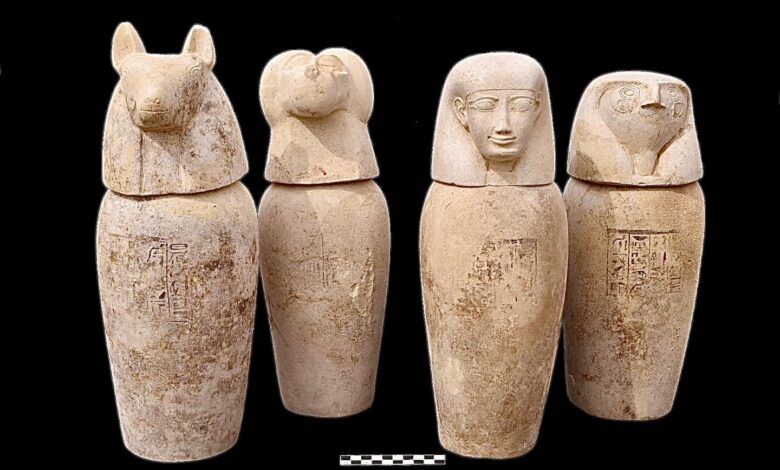
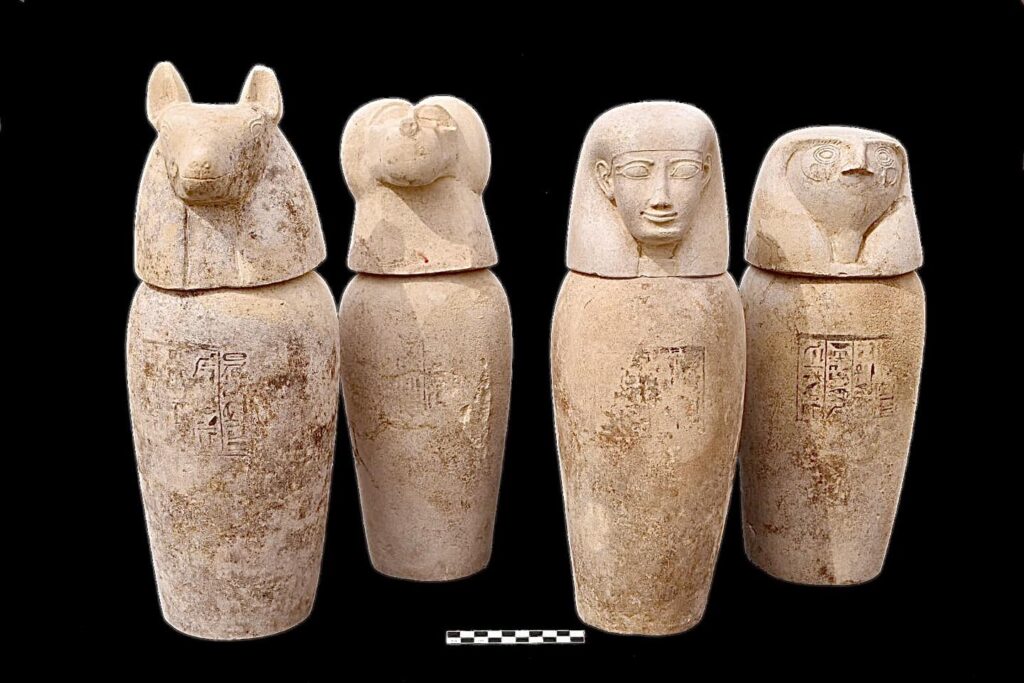
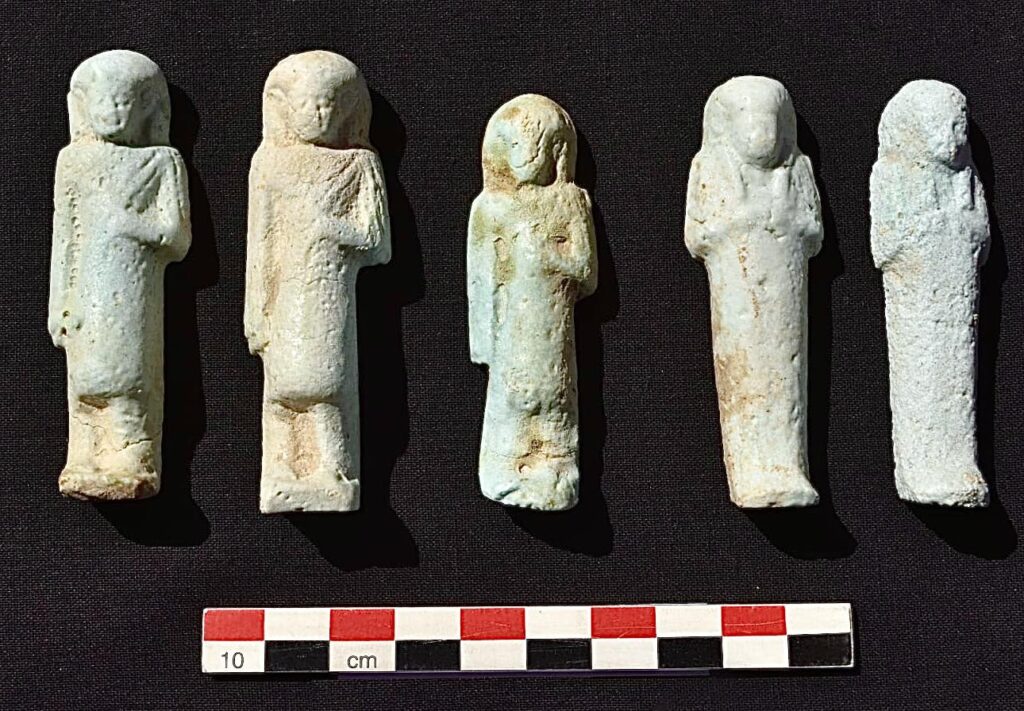
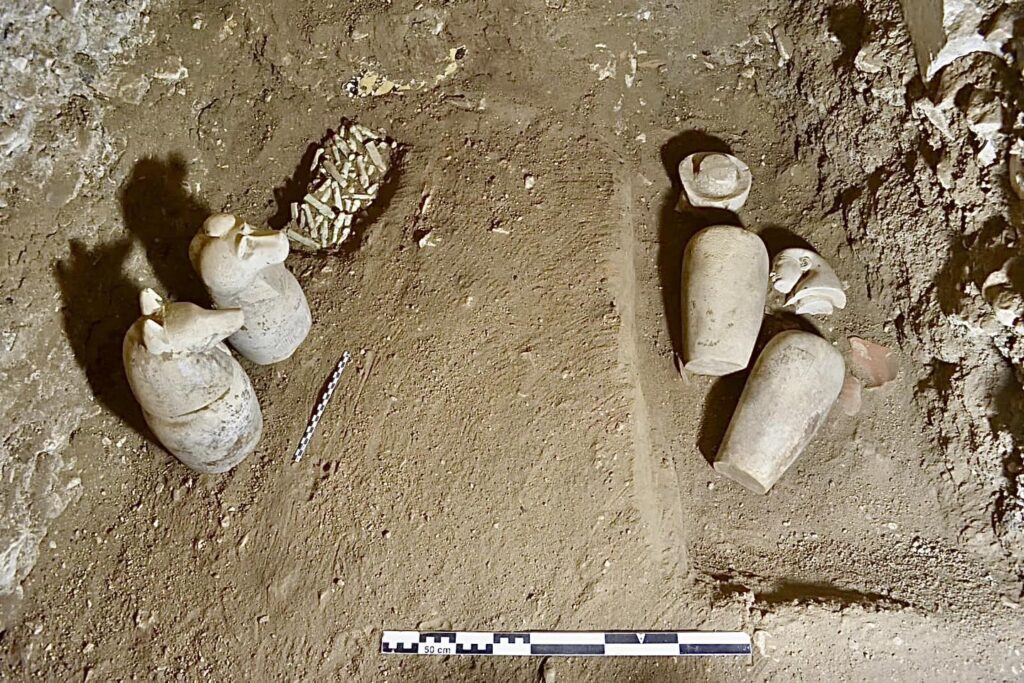
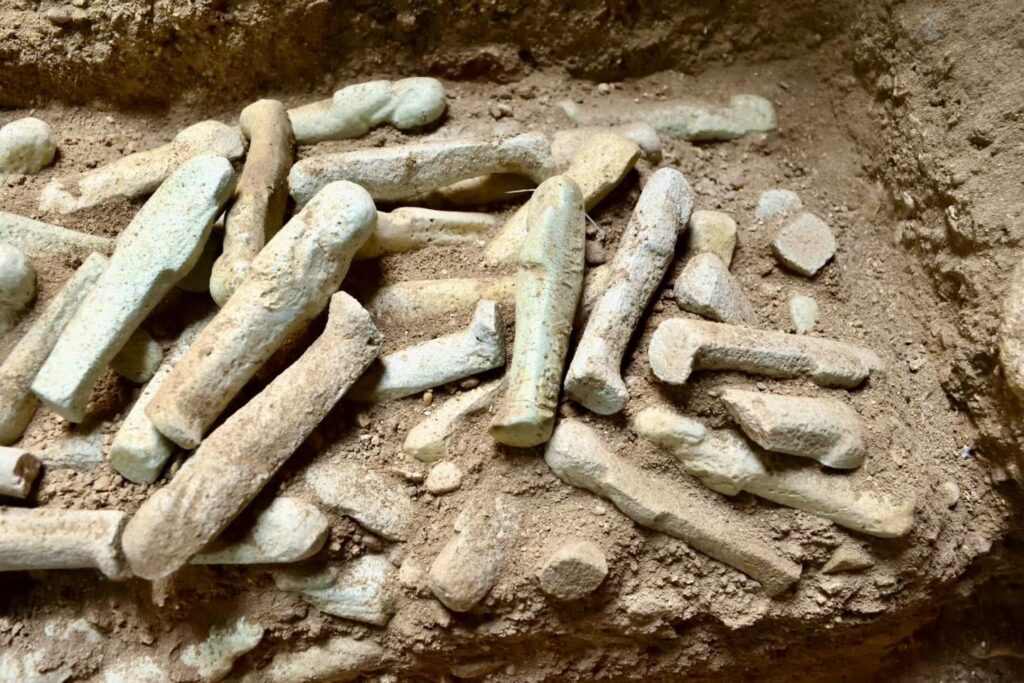
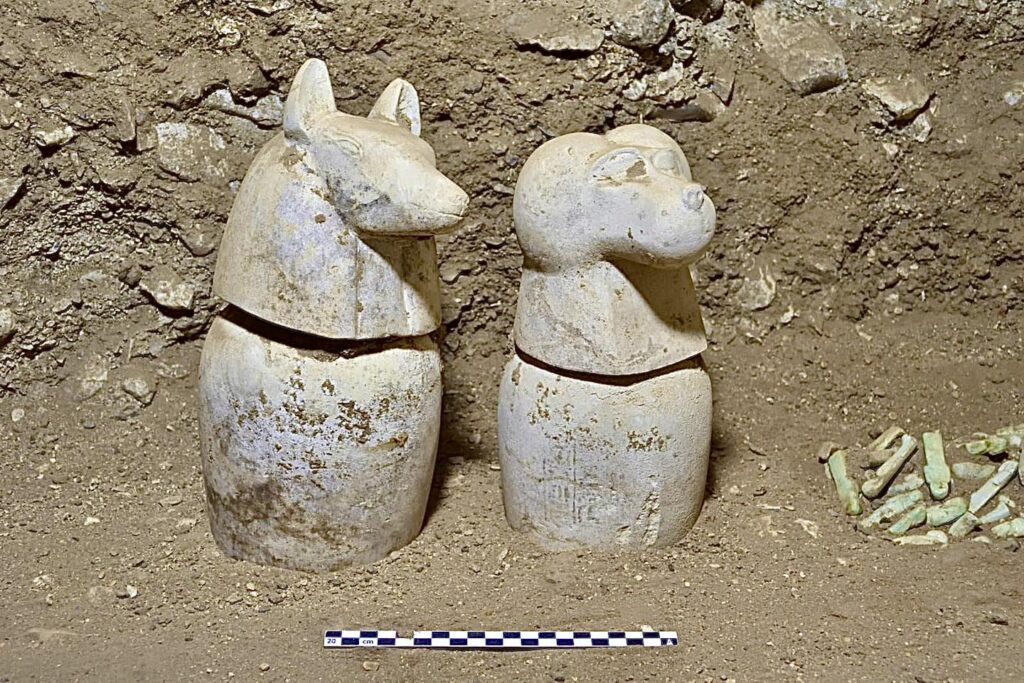
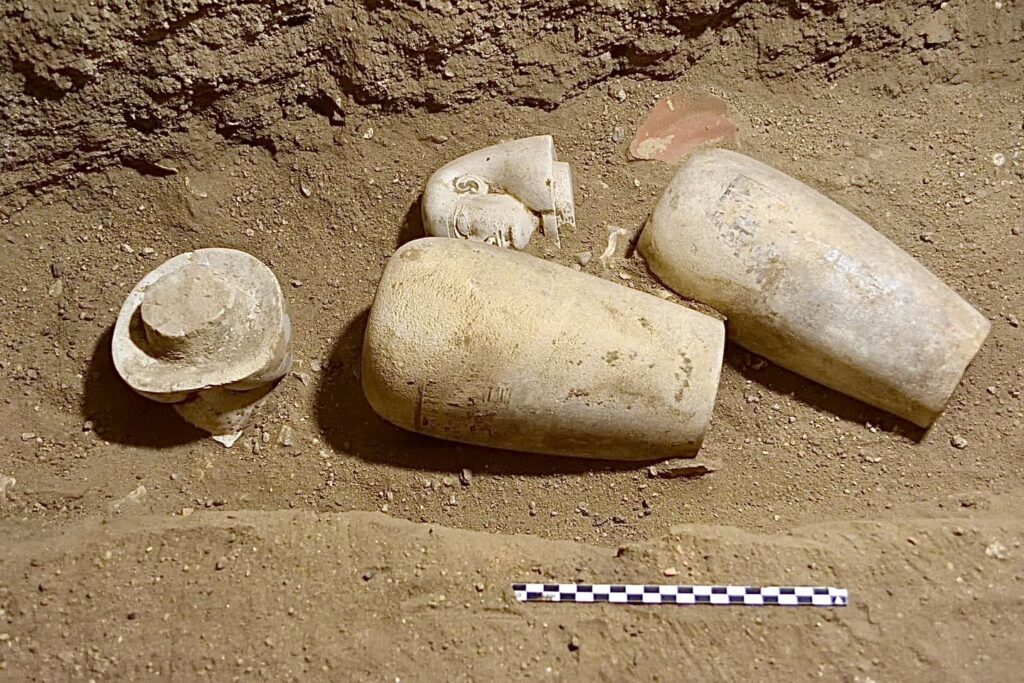
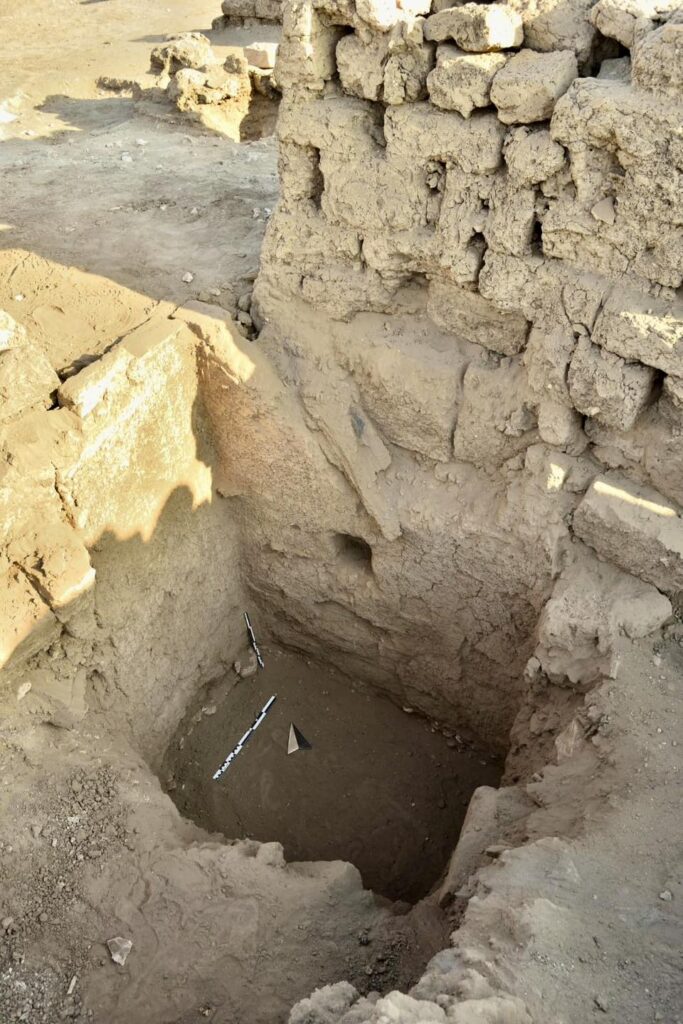
A dense concentration of tombs dating to the Third Intermediate Period was also uncovered in the northeastern sector. These tombs contained canopic jars, nested coffins, funerary tools, and more than 400 terracotta ushabti figurines—miniature servants believed to accompany the deceased in the afterlife.
The discoveries highlight the Ramesseum not simply as a space of ritual, but as a royal economic and bureaucratic hub. “This was a self-contained institution with a full administrative hierarchy,†Dr. Ismail noted, “managing resources and distributing products that reached far beyond the temple precinct—including to the artisans of Deir el-Medina, who lived and worked under royal supervision.â€
The site, originally constructed during the reign of Ramesses II (c. 1279–1213 BCE), has revealed a long and complicated history of reuse. Scientific studies indicate the area was occupied prior to the construction of the temple and later repurposed as a sprawling necropolis for priests. In later centuries, quarry workers used the site during the Ptolemaic and Roman periods.
Among the more poignant moments of the recent campaign was the rediscovery of the tomb of Sahtjeb-Ib-Ra, an official from the Middle Kingdom whose burial was originally uncovered in 1896 by the British archaeologist James Quibell. The tomb’s walls preserve vivid scenes from the official’s funeral rites.
“This is a site that has been yielding stories for more than a century,†said Dr. Hisham El-Leithy, who leads the mission on the Egyptian side. “And with every layer we peel back, we learn something new about how this place lived, died, and was reborn through the centuries.â€
Recent restoration work has focused on the temple’s southern axis, from the hypostyle hall to the sanctuary. Conservators reassembled and reinstalled the scattered fragments of a statue of Queen Tuya, the mother of Ramesses II, and placed them at their original location near a colossal seated figure of the king. Parts of a shattered statue of Ramesses II himself were reconstructed and positioned on a stone plinth, with ongoing studies assessing its condition and structure.
Across the courtyard, French archaeologists led by Dr. Christian Leblanc have been piecing together the layout of the adjacent royal palace. Though only column bases and mudbrick walls remain, the team has now mapped out a reception hall and throne room—spaces where the king is believed to have held audiences during his visits to the temple.
Other discoveries include a fragment of a granite lintel found at the second pylon gate depicting the deified Ramesses II standing before the god Amun-Ra, as well as remnants of a cornice once topped with a frieze of baboons—symbolizing worship at dawn.
In another section of the temple, excavation of the ceremonial processional routes revealed traces of a long avenue lined with statues of Anubis, the jackal god of embalming. These statues once rested atop miniature shrines. Fragments were recovered and have since been stabilized.
The Ramesseum excavation, now in its 34th season since beginning in 1991, continues to yield insights into the enduring legacy of one of ancient Egypt’s most powerful kings—and into the enduring complexity of the institutions that supported his image in life and in death.
“The Ramesseum,†said Dr. Ismail, “was never just a monument. It was a kingdom in miniature.â€
#Egypt#Archaeology#Egyptology#Luxor#Thebes#LuxorTimes