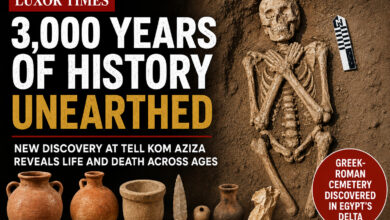

The Egyptian mission of the ministry of tourism and antiquities working at the site of Tell Kom Aziza in Abo Homos, Beheira governorate in the Delta (169 km or 105 miles north of Cairo) unearthed remains of a pottery workshop dated to the Greco-Roman period. Dr. Mostafa Waziry said that the workshop has structures dated to the period between the 3rd century B.C and the first century.
The team discovered the area where the clay get kneaded then extra substances added to make it more flexible for formation. The formation area where some tools were found including metal tools and parts of the pottery wheel and formed clay parts. The drying area which is the space where the clay used to be left to get direct sun before burning in the ovens to become pottery.


Dr. Aiman Ashmawi said the the burning ovens discovered has updraft kilns and it is built of burnt bricks and surrounded with thick layers of mud bricks to take the pressure of the burning process. Some finished pottery as well as unburnt clay were found too.

Mr. Ibrahim Sobhy (head of the mission) said “The team discovered an Early dynastic settlement contains mud brick houses with pottery inside for daily use, cooking ovens and storage magazines as well as bronze coins and a number of mud brick burials contains some skeletons buried in the squatting position and were covered with a thick mud layer and surrounded with pottery and alabaster funerary jars. Which is a proof that ancient Egyptians settled in the area from early ages to the Roman period.