
Dr. Zahi Hawass’s Latest Discovery: The Tomb of Prince Wesir-ef-Ra, Son of King Userkaf, the First Ruler of the Fifth Dynasty, Unearthed in the Saqqara Necropolis
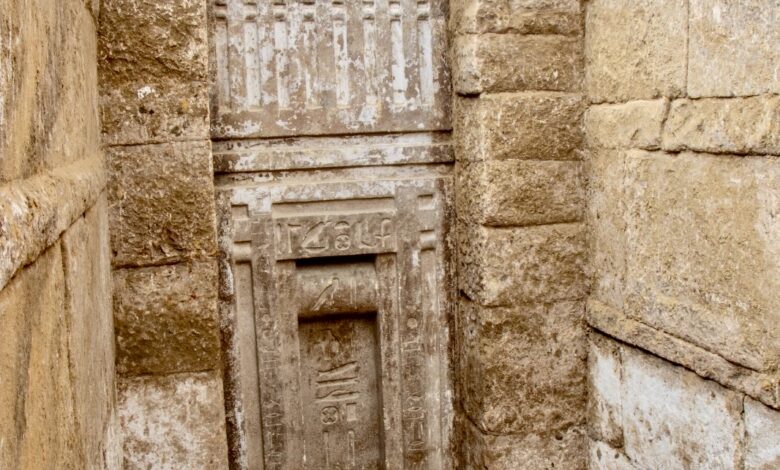
First-time discovery of a massive false door carved from pink granite
Group statues of King Djoser, his wife, and ten daughters found for the first time — Largest known pink granite false door discovered
Saqqara continues to reveal its secrets as a new Egyptian-led archaeological mission—conducted jointly by the Supreme Council of Antiquities and the Zahi Hawass Foundation for Archaeology and Heritage—uncovers the tomb of Prince Wesir-ef-Ra, son of King Userkaf, the founding pharaoh of the Fifth Dynasty. This unprecedented discovery was made during the mission’s ongoing work at the ancient necropolis south of Cairo.
A Royal Tomb Comes to Light


The tomb, dating to the Old Kingdom, was revealed along with an array of remarkable finds spanning both its original construction and later periods of reuse. The tomb’s inscriptions confirm the identity of Prince Wesir-ef-Ra, bearing titles such as Hereditary Prince, Overseer of Buto and Nekheb, Royal Scribe, Vizier, Judge, and Chanting Priest.
The discovery was announced in the presence of Minister of Tourism and Antiquities, Mr. Sherif Fathy, who praised the efforts of the all-Egyptian archaeological team and emphasized the significance of unveiling new insights into one of the most formative periods of ancient Egyptian civilization.
Record-Breaking Pink Granite False Door
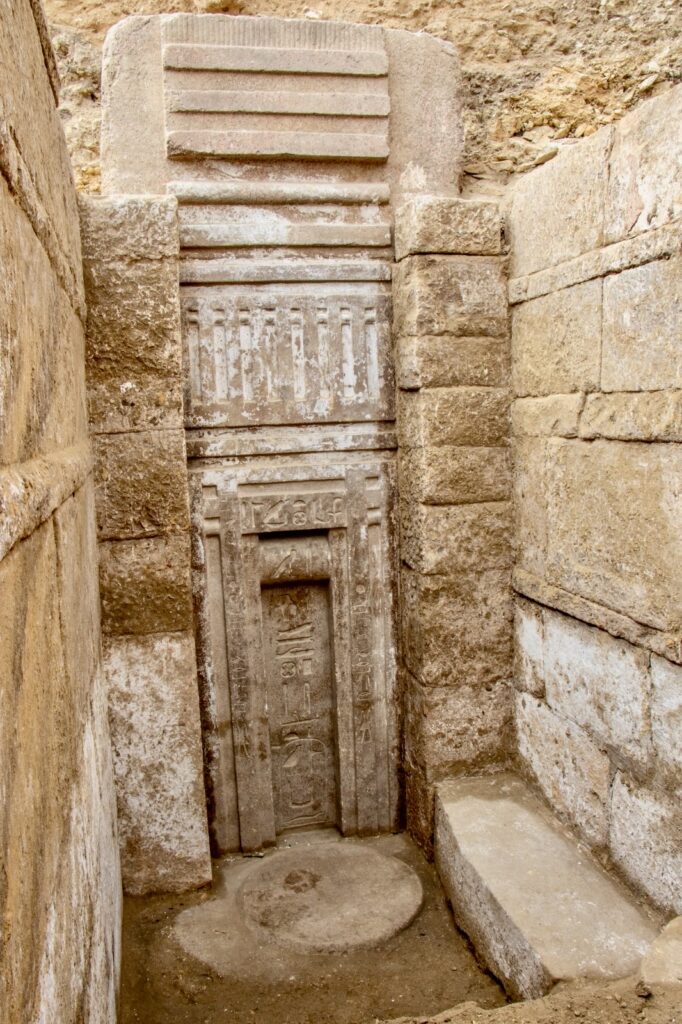
One of the most remarkable finds is a massive pink granite false door, the largest of its kind discovered to date. Measuring 4.5 meters in height and 1.15 meters in width, the door is intricately carved with hieroglyphs recording the titles and name of the tomb’s owner.
“This is the first time we’ve seen a pink granite false door of this scale in Saqqara,†stated Dr. Mohamed Ismail Khaled, Secretary-General of the Supreme Council of Antiquities.
A Statue Group Like No Other
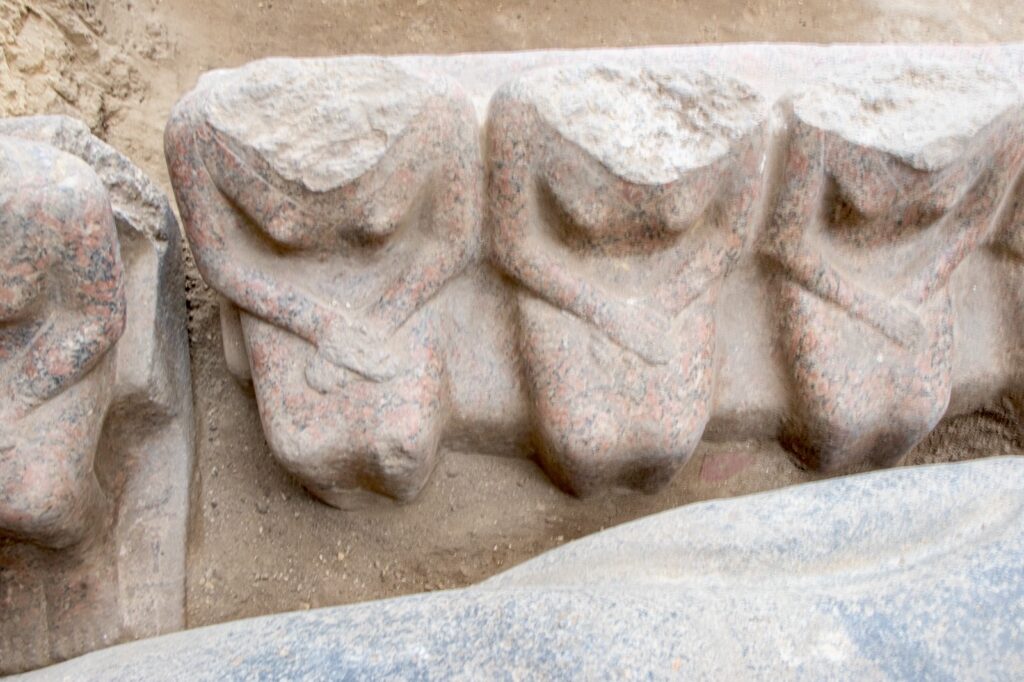
In a discovery that stunned the excavation team, a statue group depicting King Djoser, his wife, and their ten daughters was found within the tomb. According to Dr. Zahi Hawass, the statues originally stood in a chamber near Djoser’s Step Pyramid but were later transferred to Prince Wesir-ef-Ra’s tomb during the Late Period.
Preliminary studies are underway to determine the reasons for this relocation. “It’s a rare and mysterious case of statue displacement across centuries,†Hawass noted. “This raises compelling questions about the Late Period’s interaction with Old Kingdom monuments.â€
Offerings, Statues, and Signs of Reuse
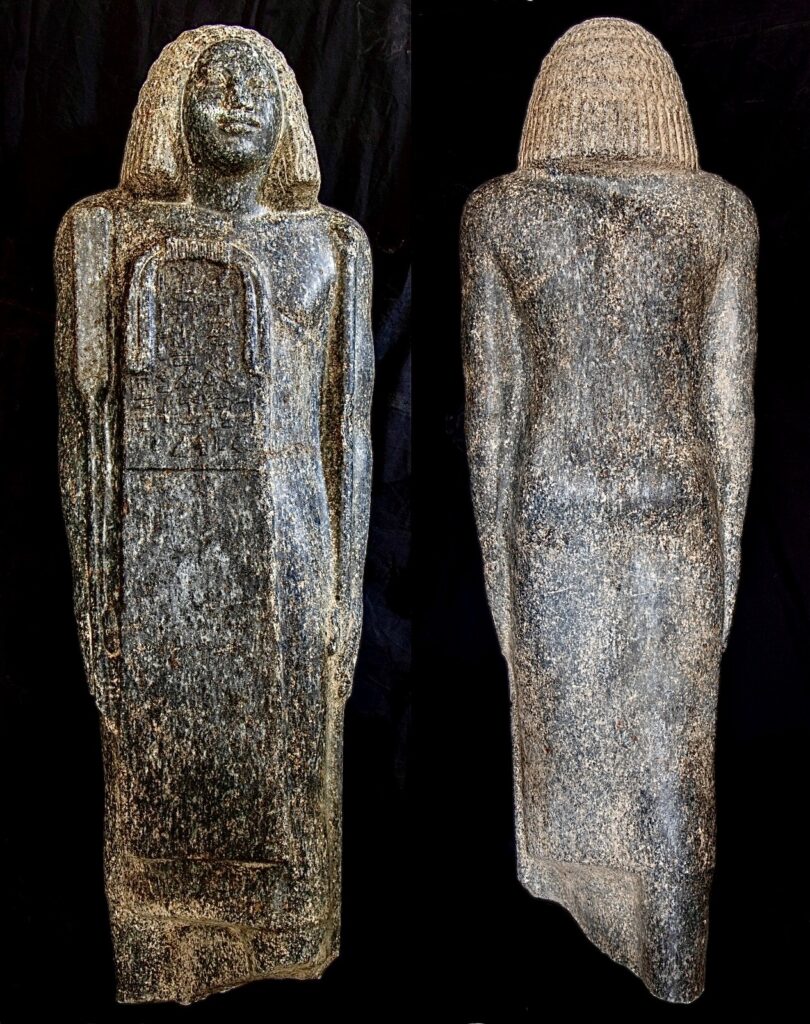
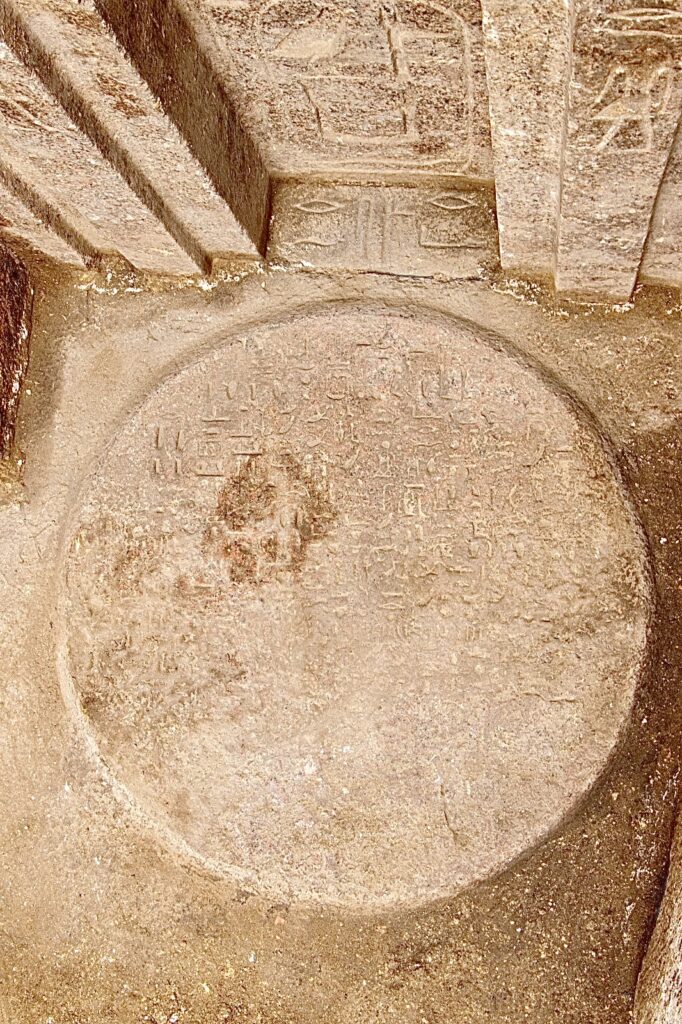
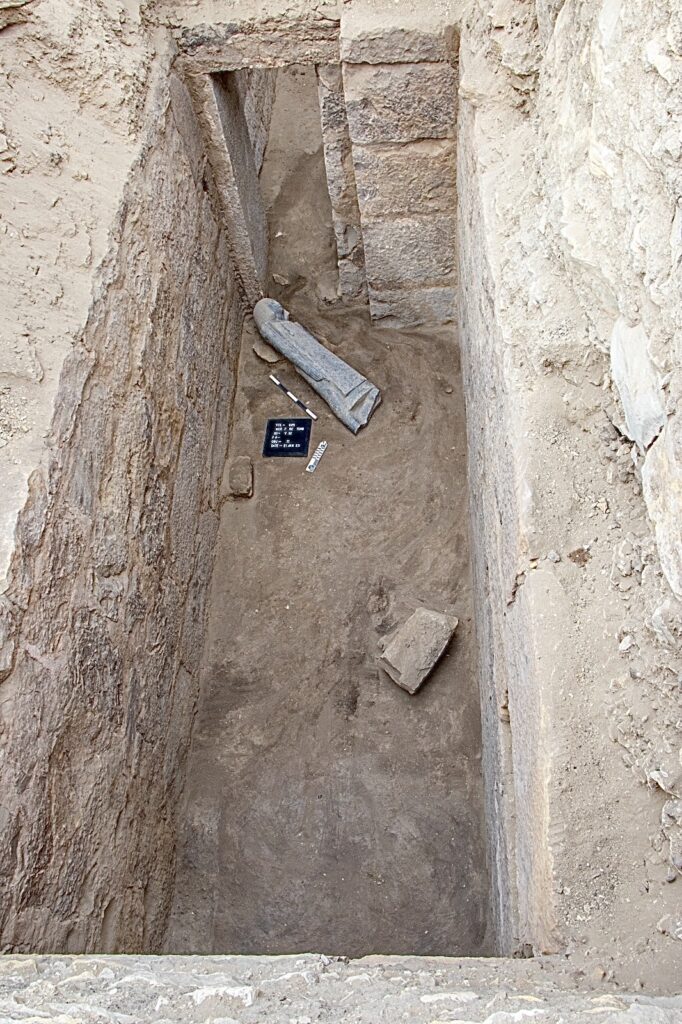
The team also discovered a red granite offering table measuring 92.5 cm in diameter, inscribed with ritual offering lists. Inside one of the chambers, a large black granite statue of a standing man—1.17 meters tall—was unearthed. The hieroglyphs identify the owner as someone likely from the 26th Dynasty, indicating that the tomb was reused in the Late Period, a common practice at Saqqara.
A Second Entrance and Rare Statue Assemblage
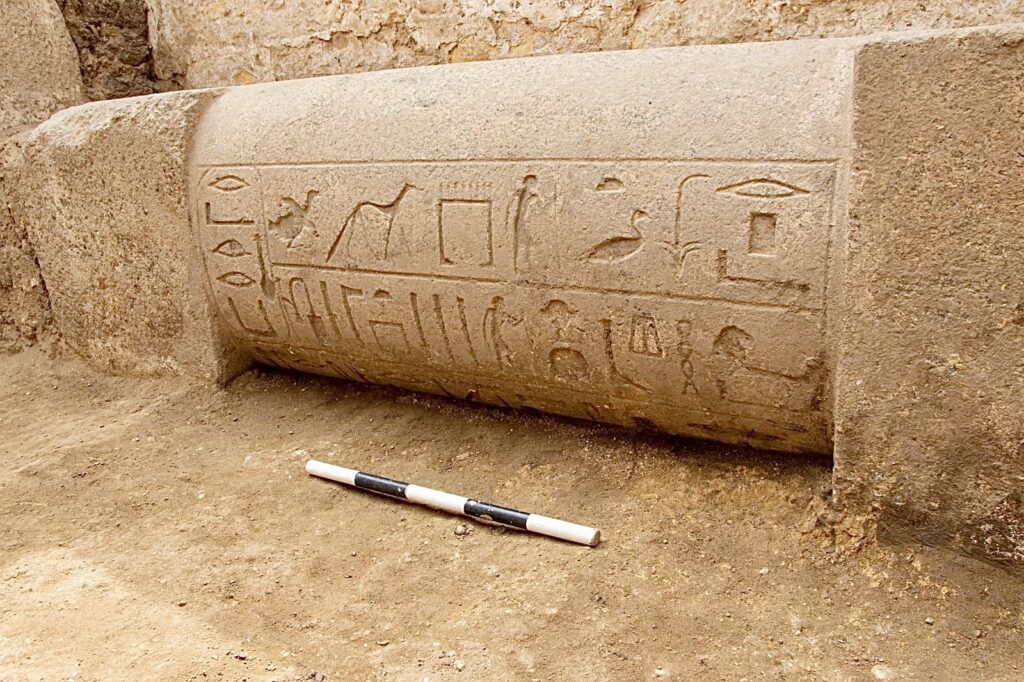
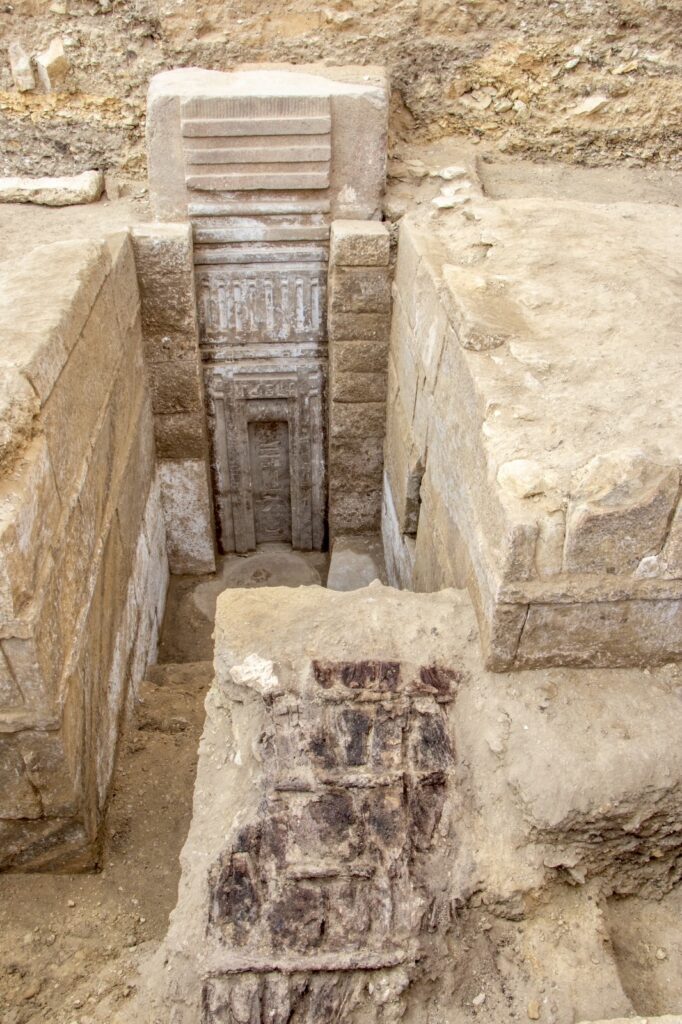
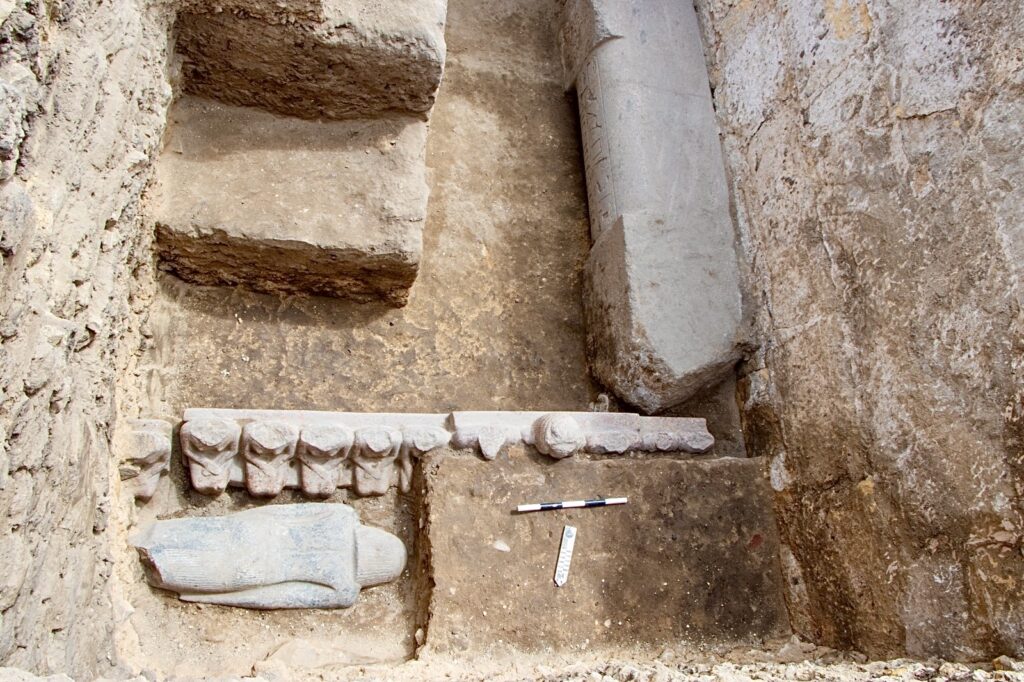
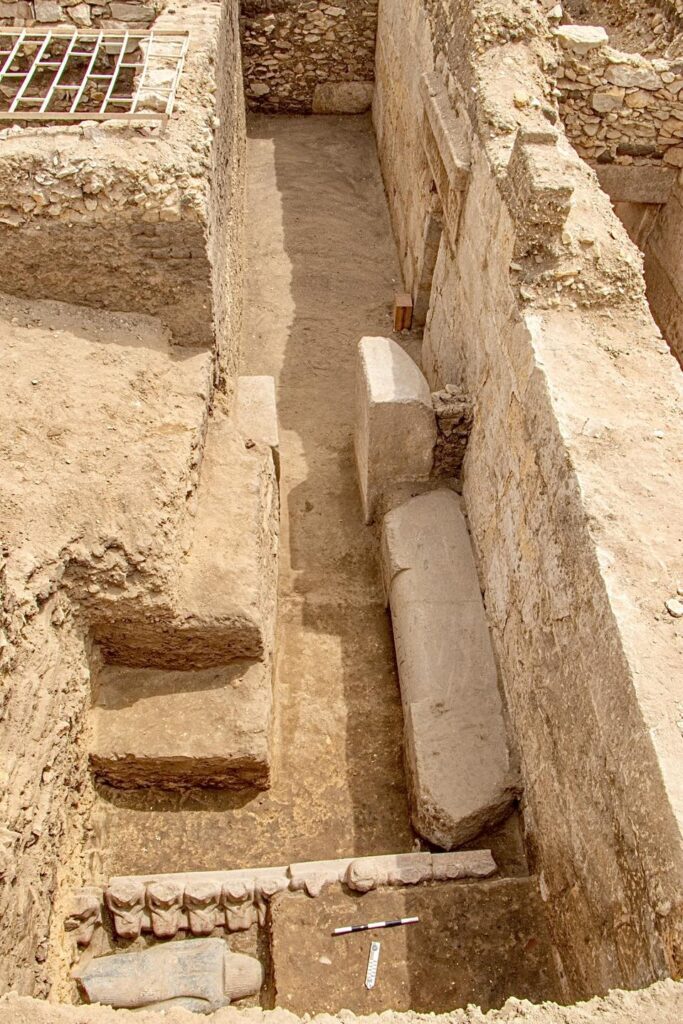
On the eastern façade of the tomb, archaeologists uncovered a second entrance with pink granite shoulders, bearing hieroglyphic inscriptions and the cartouche of King Neferirkare, a later Fifth Dynasty pharaoh. Just to the north of the entrance’s lintel, the team made an extraordinary find: 13 pink granite statues, seated on high-backed chairs—believed to represent family members and associates of the tomb owner.
Uniquely, several sculpted female heads are positioned higher than the others, thought to portray wives of the prince, with a central figure flanked by two headless statues. In front of this group, an overturned black granite statue approximately 1.35 meters high was found, its features still being studied.
An Exceptional Tomb in Saqqara’s Sacred Landscape
The mission continues excavating this unique tomb, which offers a rare blend of Old Kingdom architectural grandeur and Late Period ritual practices. The combination of massive pink granite elements, relocated royal statuary, and elite Late Period reuse make Prince Wesir-ef-Ra’s tomb one of the most distinctive burial complexes ever uncovered at Saqqara.
Luxor Times will continue to follow the progress of this exceptional excavation as further elements of the tomb come to light.