
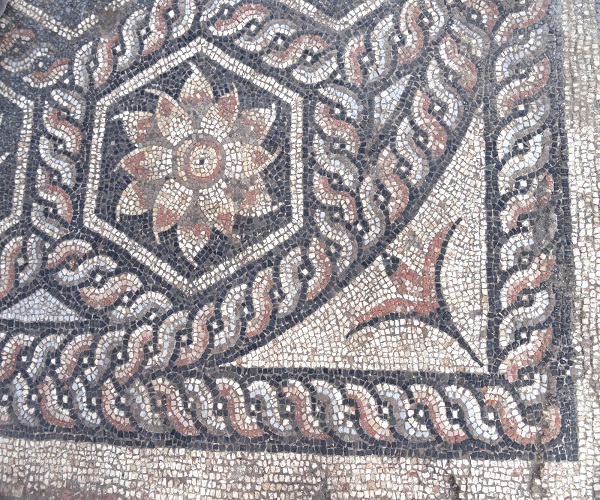
An Egyptian- Polish archaeological mission via the Polish Center of Mediterranean Archaeology UW working in Kom el Dikka in Alexandria has discovered the remains of a vast residential settlement dating back to the 4th-7th centuries AD, along with a series of Roman mosaics which cover the floor of one of the settlement houses.Â
Mostafa Waziri, the secretary general of the Supreme Council of Antiquities, said that the multi-colored mosaic floors at Kom el Dikka shows the affluence of the residents of these homes, as well as the popularity of mosaic art in Alexandria.
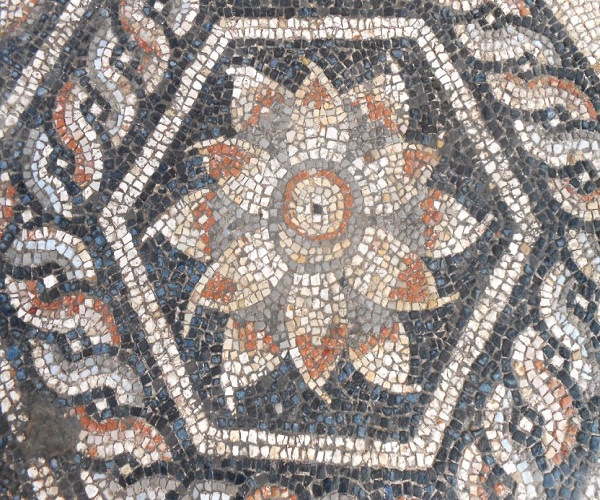
The discovered mosaic is displayed in the Villa of the Birds, which is the first museum of mosaic floors in Egypt.
Aymen Ashmawi, the Head of the Ancient Egyptian Antiquities Sector, explained that the settlement includes the remains of small theater, a grand imperial bath, and a unique group of 22 lecture halls, which are apparently the remains of an ancient university.
The discovered mosaic has an area of ​​2.60 m x 2.60 m squared, Grzegorz Majcherek, Head of the excavation mission, explained. He added that it consists of six hexagonal panels featuring lotus flowers, framed by a circular guilloche pattern.Â
Majcherek pointed out that this design is the most imposing of the dining rooms found in a Roman house, and is considered distinctive for Alexandrian style, which was exceptionally popular in Roman Egypt.Â


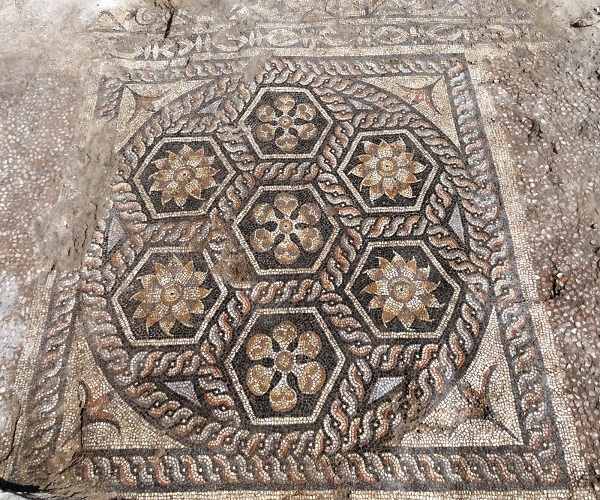
Majcherek added that the Polish Archaeological Mission has been operating at the site, which is located in the old settlement, since 1960, in cooperation with the Egyptian Ministry of Antiquities. In recent years, the excavations have focused on the study of residential architecture, which is still somewhat unstudied for Roman Alexandria between the first and third centuries AD. The buildings of that period were often lavishly decorated. The discovered mosaic is proof of this.