

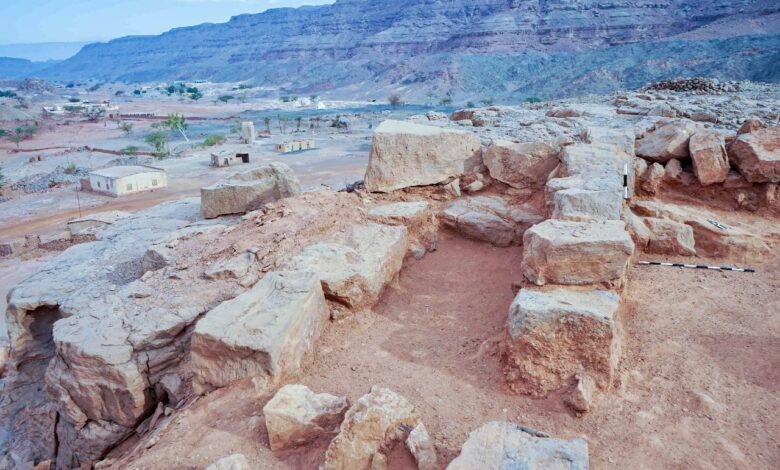
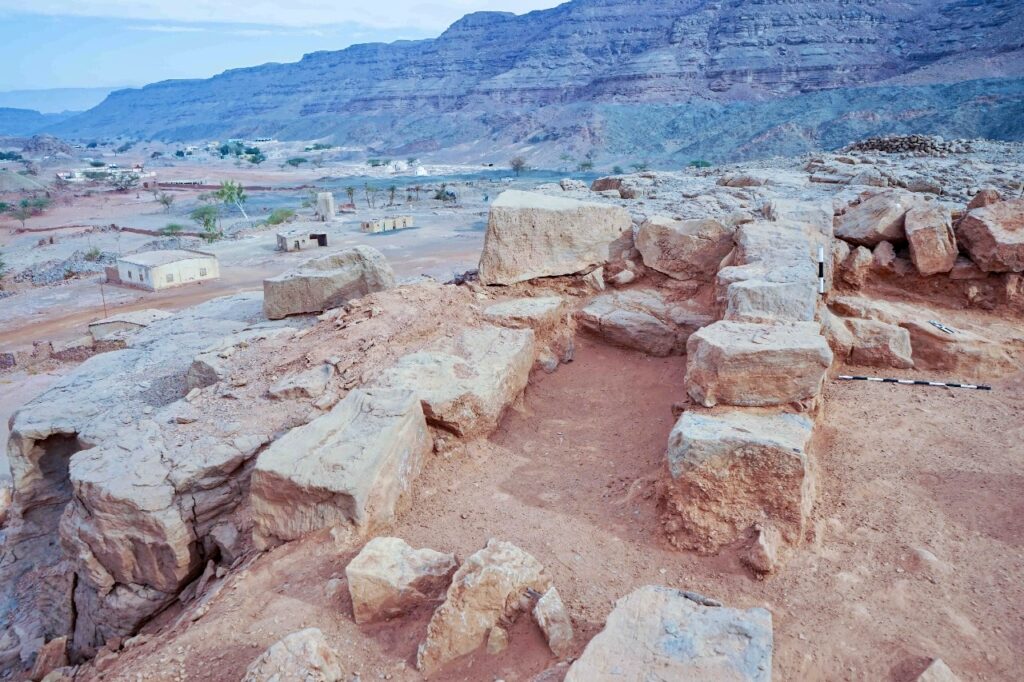
In a significant new discovery, the Egyptian archaeological mission working at Wadi Nasb in South Sinai has uncovered a copper smelting workshop, several administrative structures, and ancient watchpoints, as part of its ongoing excavations at this major mining site.
Strategic Significance of Sinai
This discovery comes within the framework of the Ministry of Tourism and Antiquities’ efforts to advance archaeological research in Sinai and to highlight Egypt’s pioneering role in managing and exploiting its mineral wealth — opening new horizons for cultural tourism in areas that still hold many secrets.
H.E. Sherif Fathy, Minister of Tourism and Antiquities, emphasized that this discovery underscores the strategic importance of Sinai in ancient Egypt as a principal source of copper and turquoise, and affirms the deep Egyptian presence in the region across the ages. He reaffirmed the Ministry’s commitment — through the Supreme Council of Antiquities (SCA) — to supporting archaeological missions, as these discoveries not only enrich scientific knowledge but also connect the achievements of ancient Egyptians with contemporary concepts of sustainable development.
Evidence of Industrial Activity Across Dynasties
Dr. Mohamed Ismail Khaled, Secretary-General of the SCA, noted that the excavation results reveal architectural and industrial remains indicating continuous Egyptian mining activity in Wadi Nasb from the Old Kingdom through to the Late Period, with a marked flourishing during the New Kingdom.


Among the finds are copper-smelting workshops, multiple copper ingots of varying shapes and sizes, and clay tuyères (blower nozzles) — compelling evidence of an organized and advanced metallurgical industry that produced copper for transport to the Nile Valley for use in craft, military, and administrative purposes.
Watchpoints Turned into Workshops
Prof. Mohamed Abdel-Badei, Head of the Egyptian, Graeco-Roman Antiquities Sector at the SCA, added that two major structures were identified:
• A rectangular sandstone building near the western entrance of Wadi Nasb.
• Another near the junction of Wadi Nasb and Wadi Suwr.
Both were initially used as watchpoints before being repurposed during the New Kingdom as smelting workshops, where several furnaces, copper slag, and ingots — one weighing over 1 kg — were discovered, along with tuyère fragments in multiple sizes.
A Central Smelting Complex
Dr. Hesham Hussein, Head of the Central Administration for Delta Antiquities and director of the mission, reported that cleaning and study also extended to a third structure located on the southern edge of Wadi Suwr, likely a control point or observation post for ancient Egyptian mining expeditions, possibly predating the New Kingdom.
The team also revealed part of a vast central workshop containing various types of copper smelting furnaces, ore preparation tools, ceramic crucibles, Egyptian amphorae and vessels, large quantities of charcoal prepared from local trees, and refined clay blocks used to make tuyères.
Looking Ahead
The Egyptian mission continues its work at Wadi Nasb, aiming to uncover more details that will document Sinai’s vital strategic role throughout ancient Egyptian history and shed further light on its importance as one of Egypt’s major metallurgical and mining centers.
#Egypt#Archaeology#Egyptology#Sinai