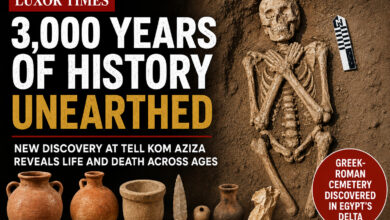

Tomb of Ramesses III’s Military Commander Discovered in Egypt, Alongside Burials from Late and Graeco-Roman Periods.
Egyptian Archaeologists uncover a high-ranking officer’s final resting place in Tell el-Maskhuta and Tell Roudeh Iskander, revealing Egypt’s strategic military past and centuries of burial practices.
Egyptian archaeologists have unearthed the tomb of a military commander who served under King Ramesses III, shedding new light on the defensive fortifications that once protected Egypt’s eastern frontier. The discovery, made at Tell el-Maskhuta and Tell Roudeh Iskander in Ismailia Governorate, also includes a vast collection of communal and individual burials spanning from the Late Period to the Graeco-Roman era.
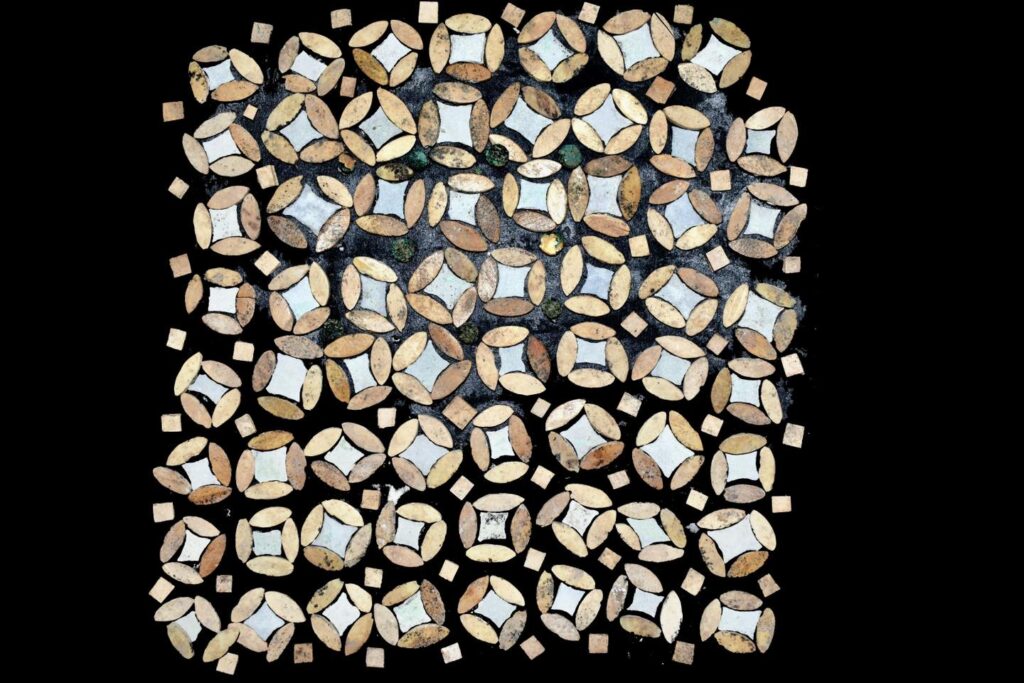
The tomb, built of mudbrick, contains a central burial chamber and three adjoining rooms, their walls still coated with remnants of white plaster. Inside, researchers found a skeleton covered in cartonnage, a material used in funerary masks, suggesting the tomb had been reused in a later period. Alongside the remains were a cache of bronze weapons—including arrowheads and a heka scepter—strong indicators of the deceased’s high military rank.
“The discovery underscores the strategic role of Tell el-Maskhuta and Tell Roudeh Iskander in securing Egypt’s borders during the New Kingdom,†said Dr. Mohamed Ismail Khaled, Secretary-General of the Supreme Council of Antiquities. “These sites played a critical role in military defense, evidenced by the artifacts found within the tomb.â€
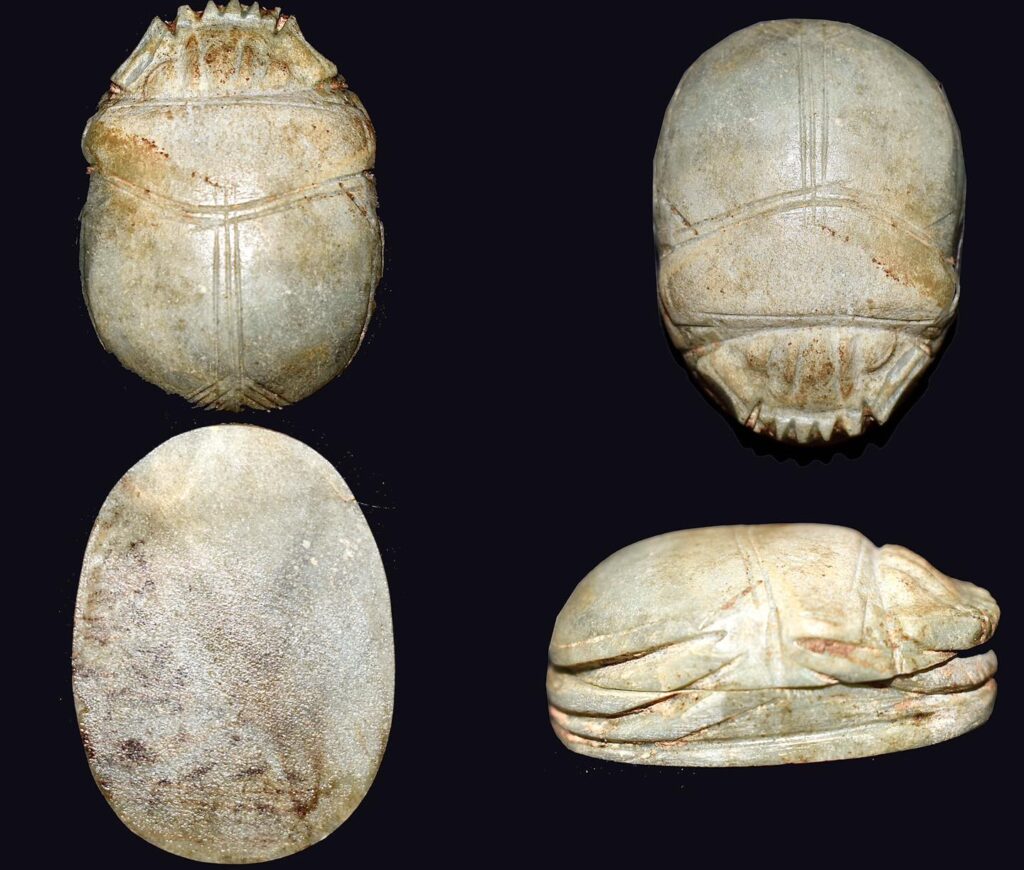
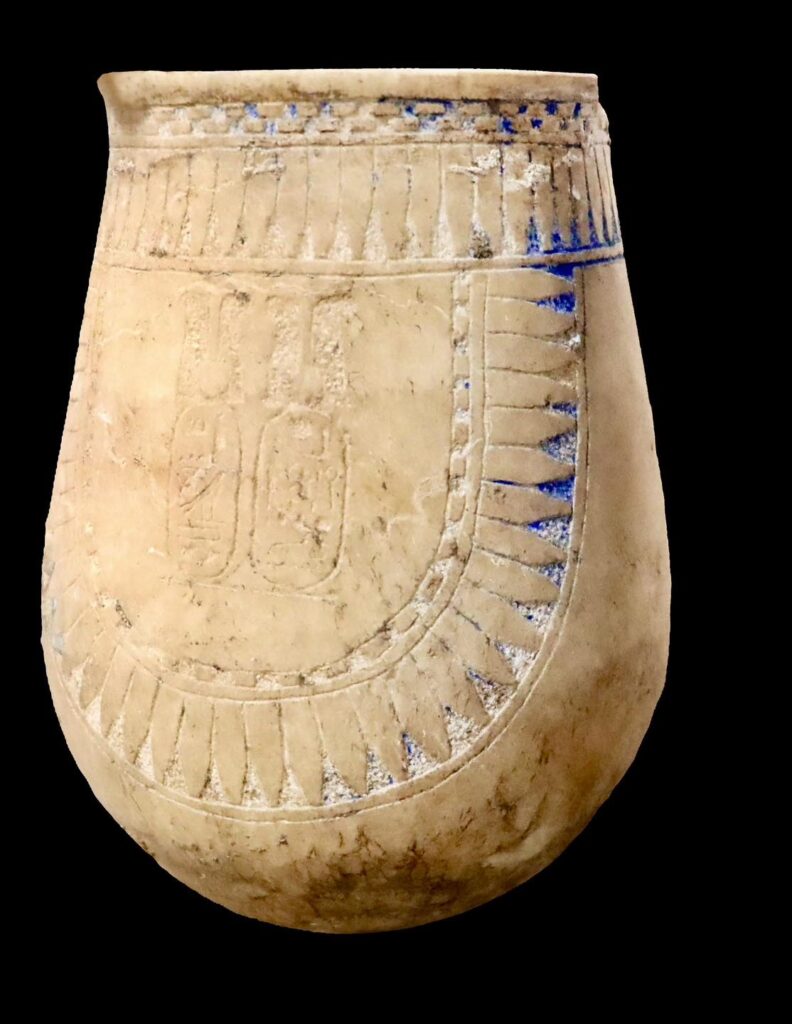
Mohamed Abdel-Badie, Head of the Egyptian Antiquities Sector at the Supreme Council of Antiquities, highlighted the architectural significance of the tomb, explaining that it was constructed of mudbrick and consisted of a main burial chamber and three additional rooms. “The walls were coated with a layer of white plaster, and inside, we found a human skeleton covered with cartonnage, which dates to a later period than the tomb’s original construction. This suggests that the tomb was reused in a subsequent era,†he said. The mission also uncovered a collection of well-preserved alabaster vessels decorated with inscriptions and traces of color, including two cartouches bearing the name of King Horemheb, one of the most significant military leaders and warrior-kings of the 18th Dynasty.


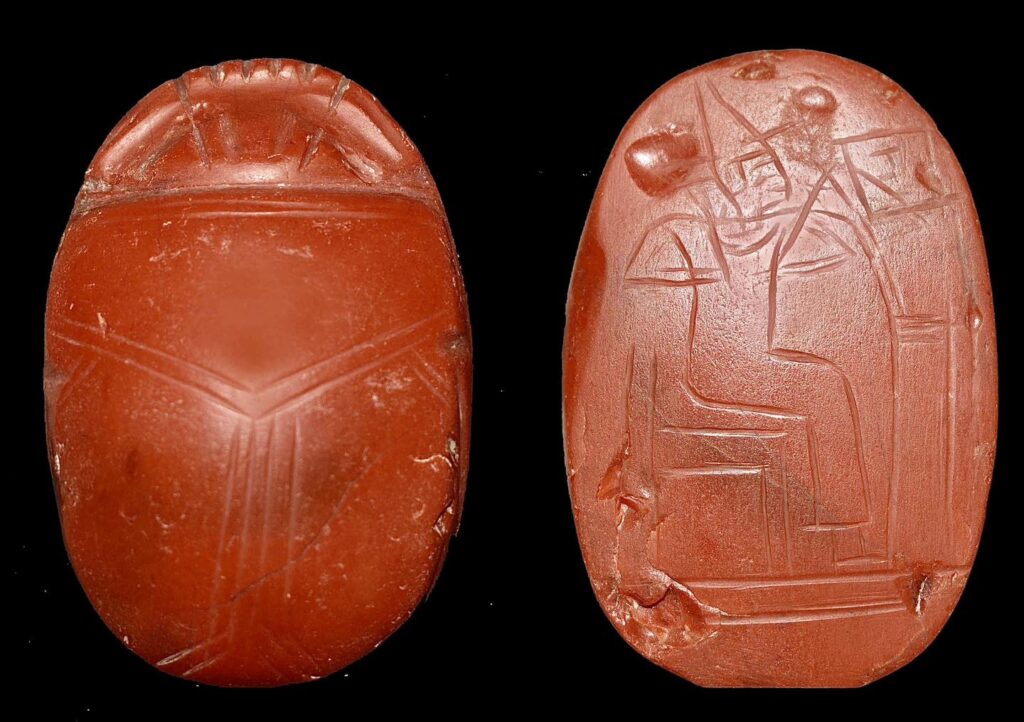
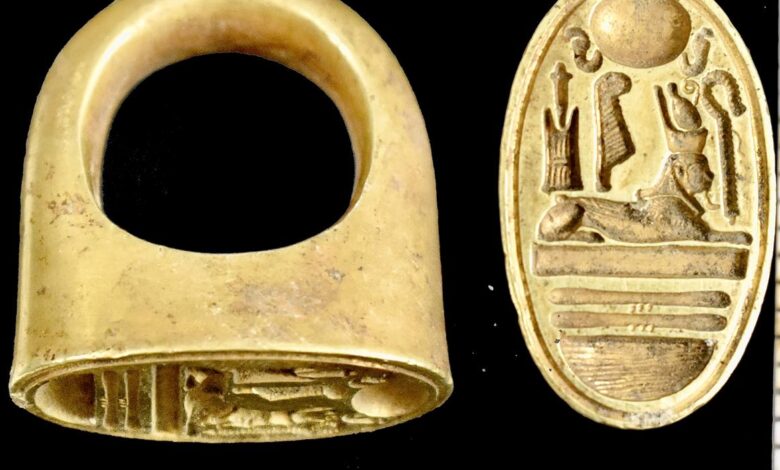
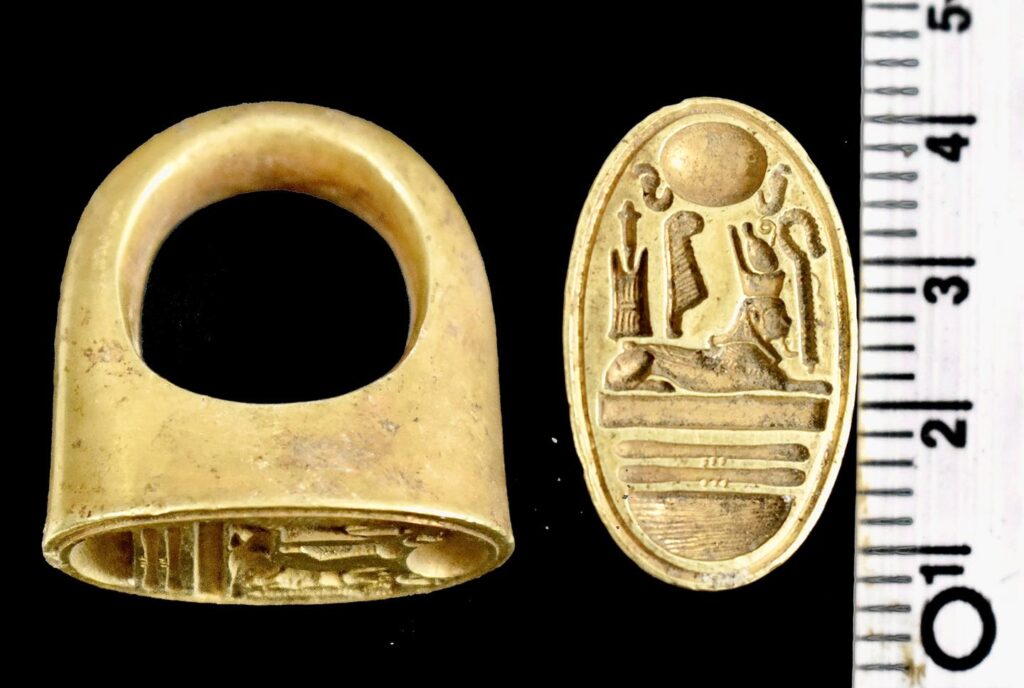
Among the most striking finds was a gold ring engraved with the cartouche of Ramesses III, the warrior-king who defended Egypt from the Sea Peoples in the 12th century BCE. Other notable discoveries include a collection of beads and gemstones in various shapes and colors, as well as a small ivory box.
Beyond the commander’s tomb, archaeologists uncovered communal burials from the Graeco-Roman period, containing human skeletal remains, as well as individual burials from the Late Period, which yielded amulets of the protective deities Taweret and Bes, along with a wedjat eye amulet—symbols of protection and rebirth in ancient Egyptian belief.
“This is a rare glimpse into the continuity of burial practices across multiple eras,†said Kotb Fawzy, Head of the Central Administration for Lower Egypt and Sinai Antiquities. “The artifacts reveal a layered history of how this region remained significant for centuries.â€
The excavation offers fresh insights into Egypt’s long-standing military infrastructure and its role in shaping the country’s history. As work continues, archaeologists hope to uncover further details about the individuals buried here and the evolving cultural landscape of this ancient frontier.
#Egypt#Archaeology#Egyptology#LuxorTimes