
Mummies and Richly Decorated Tombs Discovered.
Stunning Finds in Egypt’s Bahnasa
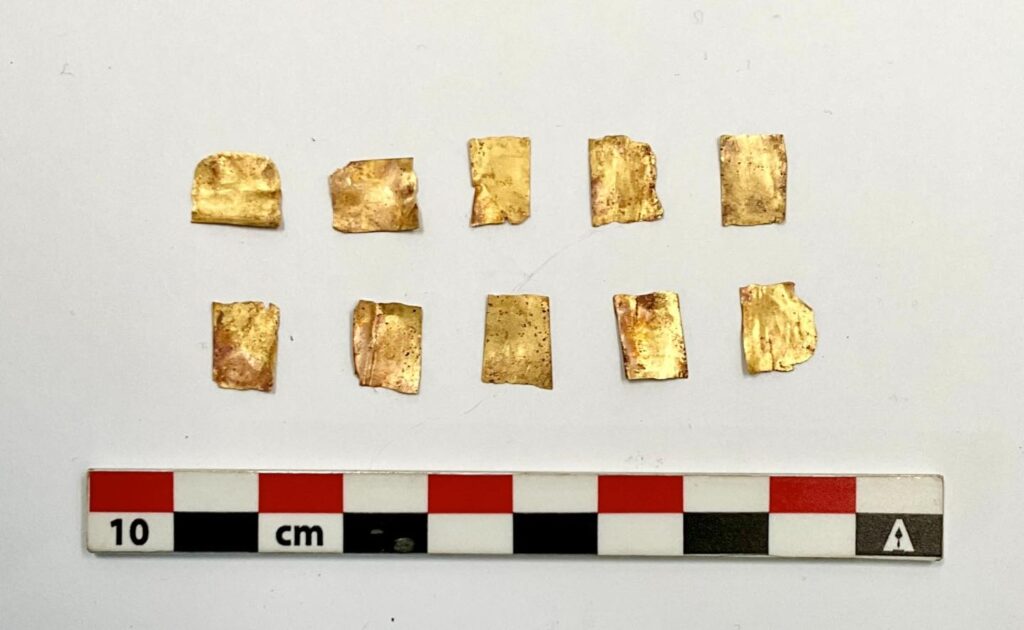
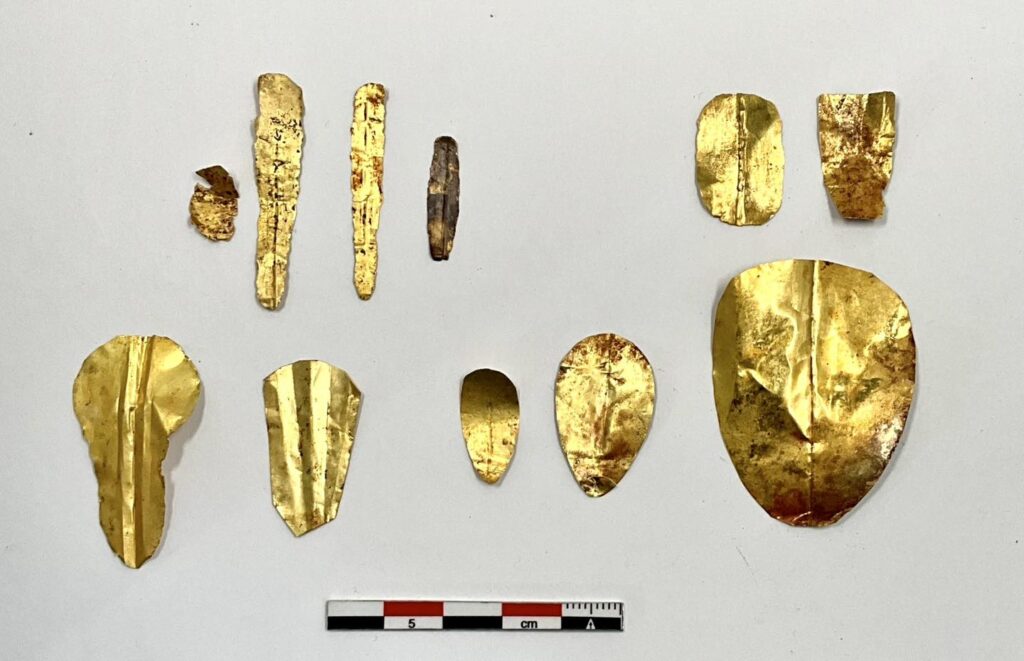
In a discovery hailed as groundbreaking, a joint Egyptian-Spanish archaeological team has unearthed richly adorned tombs dating back to the Ptolemaic period in the historic area of Bahnasa, located in Egypt’s Minya province. Among the extraordinary finds are human remains with gold tongues and nails, vibrant wall paintings, and a treasure trove of ancient artifacts, offering a rare glimpse into the religious and cultural practices of the era.
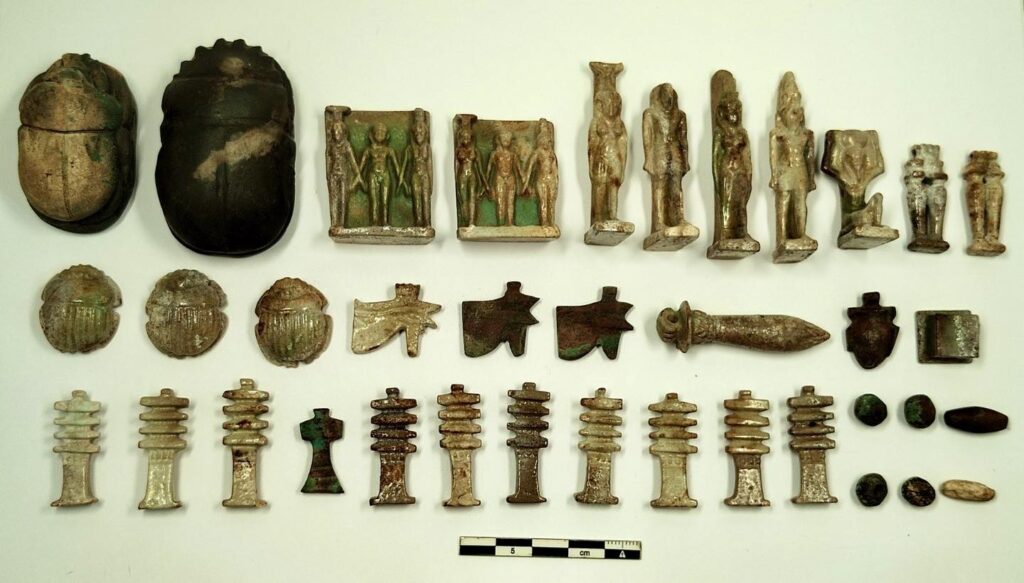
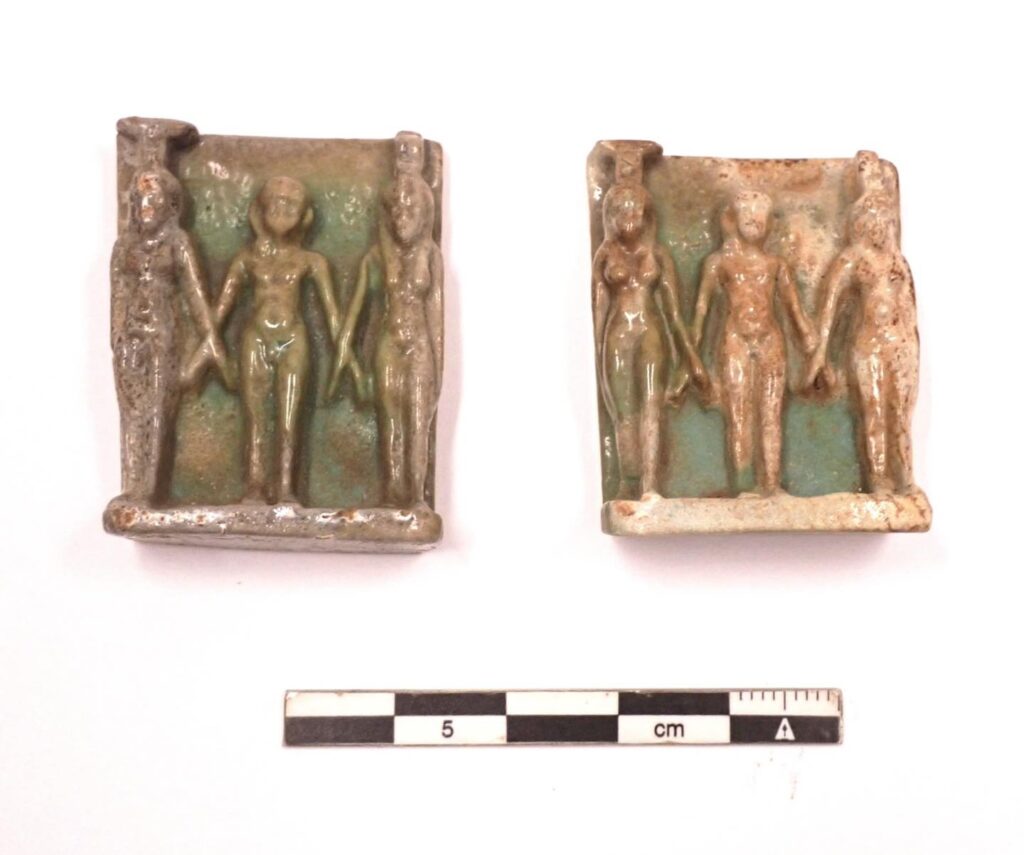
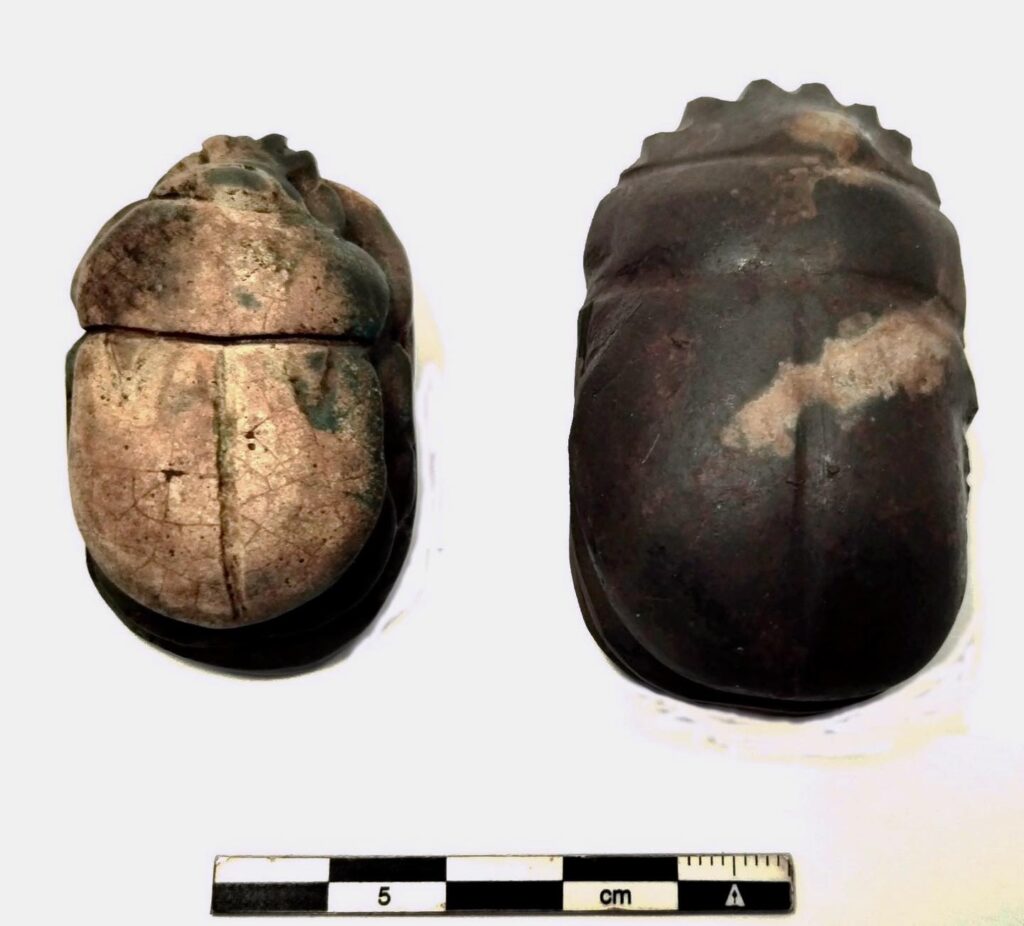
The excavation, conducted by archaeologists from the University of Barcelona and the Institute for the Ancient Near East, revealed tombs featuring multicolored inscriptions, skeletal remains, and coffins, as well as amulets and scarabs associated with prominent deities like Isis, Horus, and Thoth. The discovery is part of ongoing research aimed at uncovering the secrets of this archaeologically rich site.
“This is a significant milestone for the Bahnasa region,” said Dr. Mohamed Ismail Khaled, Secretary-General of Egypt’s Supreme Council of Antiquities. “For the first time here, we have found human remains with 13 gold tongues and nails, as well as inscriptions and imagery that shed light on the religious rituals of the Ptolemaic period.”
A Ritualistic Burial


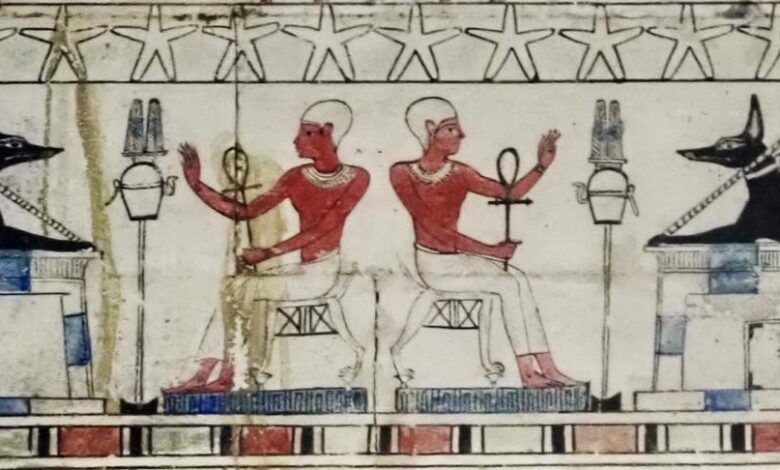
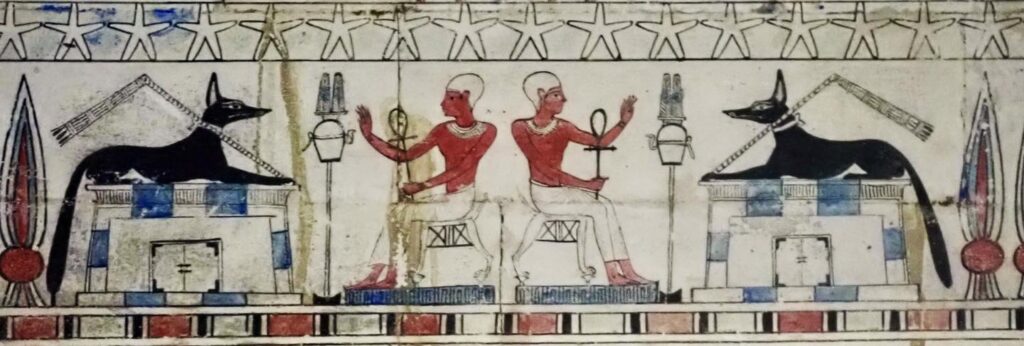
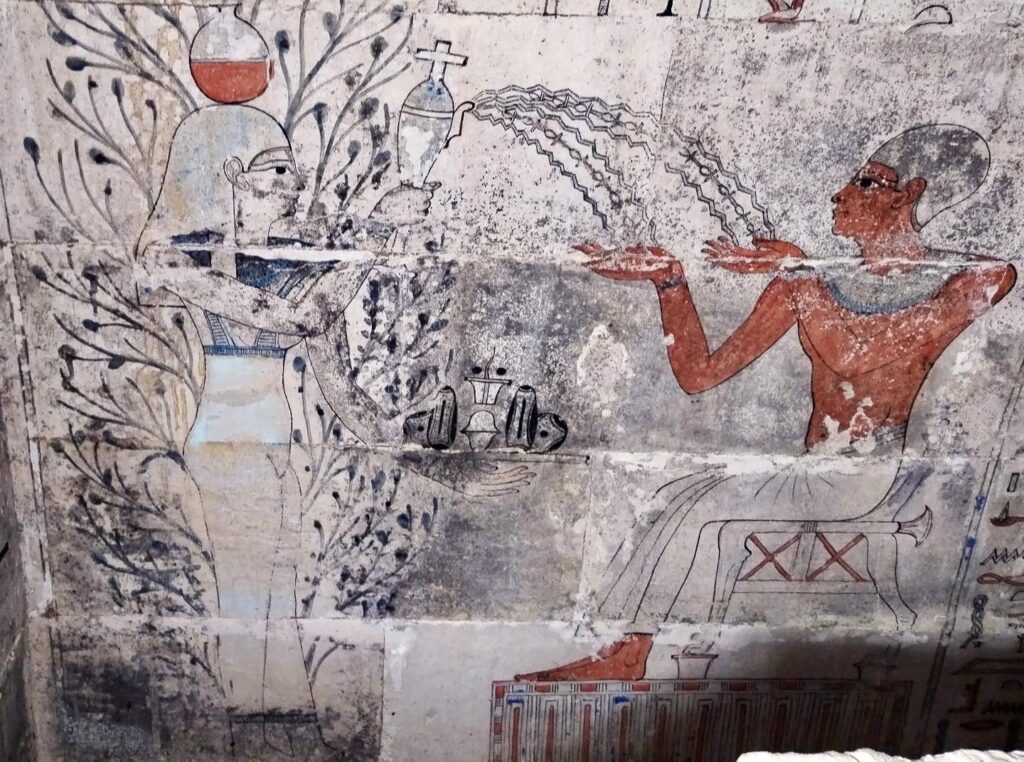
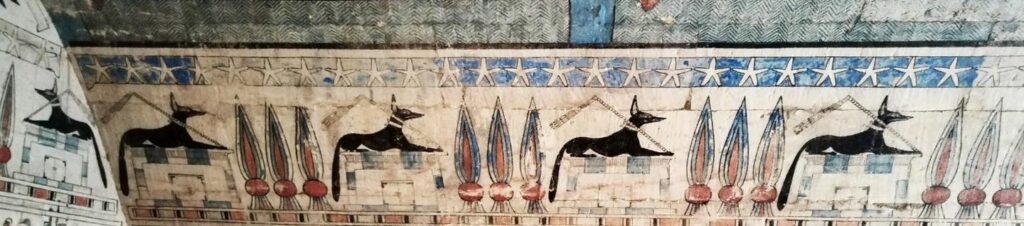
One tomb, accessed through a rectangular stone shaft, contained a central hall leading to three burial chambers filled with dozens of mummies, stacked side by side, suggesting the use of these chambers as communal resting places. In another shaft, archaeologists uncovered a tomb featuring intricate wall art depicting Wen-Nefer, the tomb owner, and his family in the presence of ancient Egyptian gods such as Osiris, Anubis, and Atum.
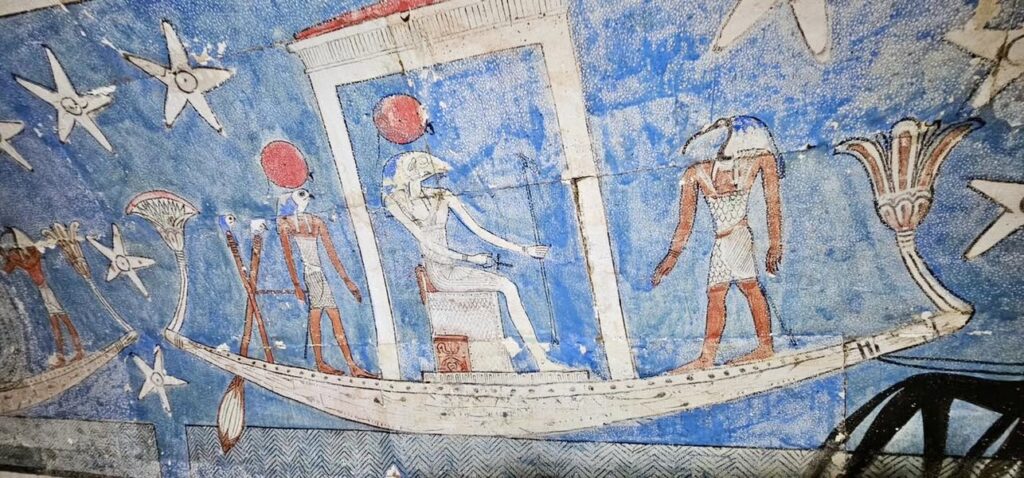
The ceiling of the chamber was decorated with a celestial scene of the sky goddess Nut, her white figure set against a blue backdrop adorned with stars. Surrounding her were sacred boats carrying solar deities like Khepri and Ra.
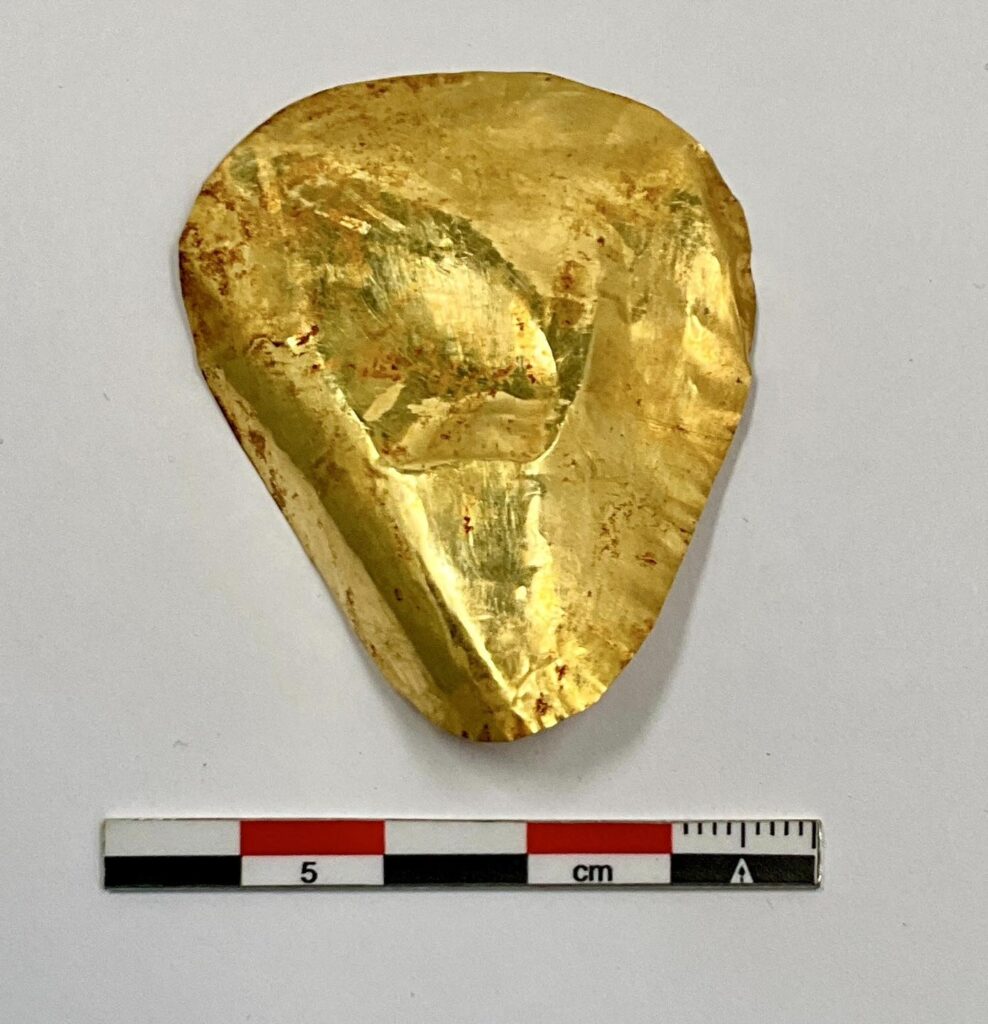
Notably, a thin, gleaming layer of gold was found on the face of a mummy being embalmed by Anubis in one depiction. The same golden embellishment appeared on images of Osiris, Isis, and Nephthys, positioned as guardians before and behind the deceased.
Artifacts That Speak
In one particularly evocative discovery, a heart scarab was found intact within a mummy’s chest cavity. Researchers also identified 29 amulets of the Djed pillar, a symbol of stability, alongside scarabs linked to deities, including Horus and Thoth. Some artifacts bore rare iconography that combined multiple deities, further enriching interpretations of Ptolemaic religious beliefs.
Dr. Hassan Ibrahim Amer of Cairo University, who leads the excavation, described the findings as “an unprecedented glimpse into the artistic and religious syncretism of the time.”
An Ongoing Archaeological work
The Bahnasa site, known in antiquity as Oxyrhynchus, has yielded remarkable discoveries in recent years, from Roman-era basilicas to a Saite-period Osireion temple. According to Dr. Maite Mascort, a Spanish co-director of the mission, the team’s past findings also included tombs spanning the Saite, Greek, and Roman periods, demonstrating the site’s long-standing significance.
With each excavation season, archaeologists uncover new layers of history, adding to the understanding of Bahnasa’s role as a cultural and religious hub in ancient Egypt.
The mission plans to continue its work, hopeful that further discoveries will illuminate the mysteries of this remarkable archaeological site.