
Ancient Gold Processing Center and Miners’ Settlement Discovered at Sukari
For more than three millennia, an ancient mining community lay hidden beneath the shifting sands of Egypt’s Eastern Desert. Now, after two years of excavation, archaeologists have uncovered a vast industrial complex that once thrived at Jabal al-Sukari, southwest of Marsa Alam. The discovery, part of the “Revival of the Ancient City of Gold†project, was led by Egypt’s Supreme Council of Antiquities in collaboration with the Sukari Gold Mine management.
“This project is a testament to our commitment to preserving Egypt’s rich history while supporting the country’s economic and developmental plans,†said Sherif Fathy, Egypt’s Minister of Tourism and Antiquities.
An Ancient Gold Factory Hidden in the Sand
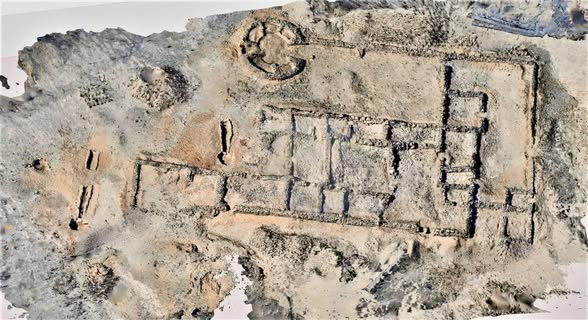
Beneath layers of windblown sediment, archaeologists unearthed the remains of what appears to be a fully equipped gold-processing facility, designed to extract the precious metal from quartz veins. The site contains remnants of massive stone crushers, grinding installations, and sedimentation basins. The final step? Ancient clay furnaces used for smelting gold, revealing a sophisticated industrial operation that once powered Egypt’s gold economy.


Dr. Mohamed Ismail Khaled, Secretary-General of the Supreme Council of Antiquities, called the discovery “a window into the advanced techniques used by ancient Egyptians to extract gold from rock.†He added that the project has also shed light on the daily lives of miners, whose world has remained largely unexplored.
A City in the Desert: Homes, Workshops, and Sacred Spaces
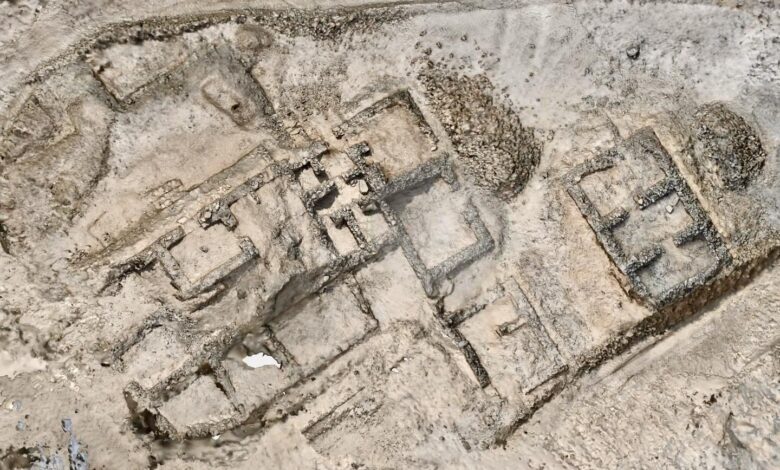
Beyond the gold factory, archaeologists found traces of an entire miners’ settlement—the homes of the laborers who lived and worked at the site. The ruins include:
• Workshops and industrial zones where tools were crafted and maintained.
• Places of worship, providing insight into the spiritual lives of these miners.
• Administrative buildings, which likely played a role in managing labor and resource distribution.
• Ptolemaic-era bathhouses, indicating continued use of the site well into the Greek and Roman periods.
Layers of history emerged as excavators peeled back time, revealing structures and artifacts spanning the Pharaonic, Ptolemaic, Roman, and Islamic periods.
A Treasure Trove of Ancient Inscriptions and Artifacts
Among the most significant finds at the site are 628 ostraca—pottery shards inscribed with hieroglyphic, demotic, and Greek texts. These fragments could hold vital clues about the site’s history, including the lives of those who toiled there.
Other discoveries include:
• Ptolemaic bronze coins, remnants of the site’s continued importance in later periods.
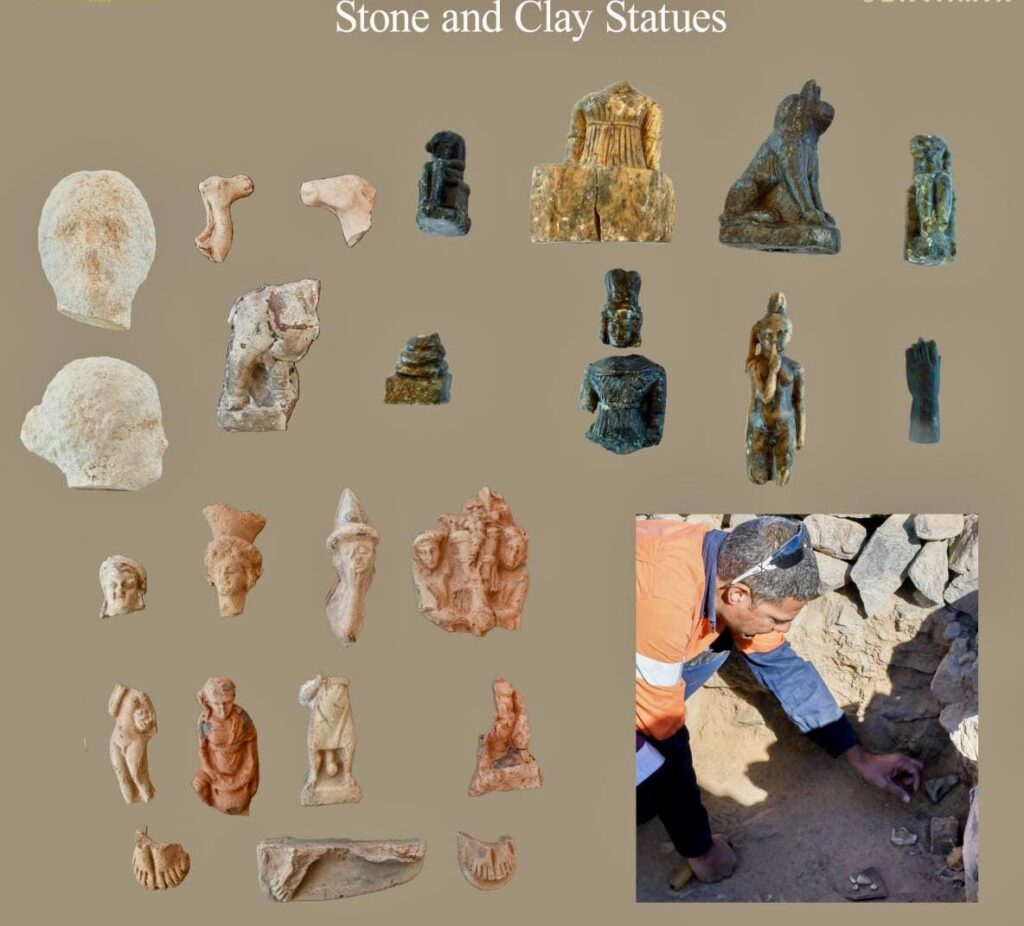
• Terracotta figurines, depicting both human and animal figures from the Graeco-Roman era.
• Small stone statues, some unfinished, featuring deities such as Bastet and Harpocrates.
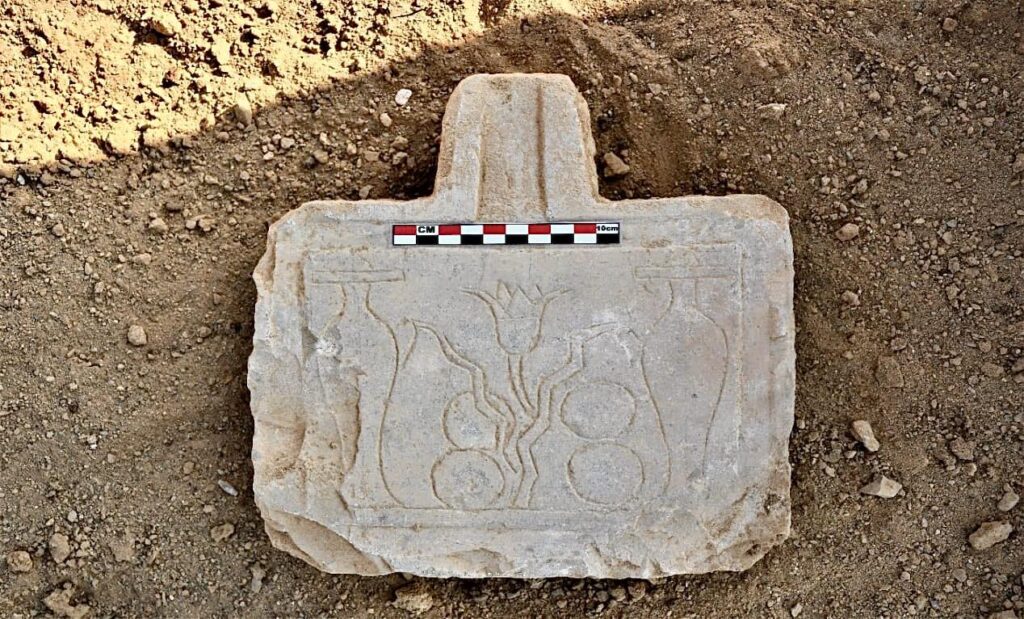
• Ptolemaic offering tables, possibly used in religious rituals connected to mining operations.
• An array of pottery vessels, used for daily life, incense, and medicinal purposes.
• Jewelry-making materials, including beads made of semi-precious stones and elaborately carved shells.
Bringing the Ancient Gold City Back to Life
To ensure the preservation of these discoveries, archaeologists relocated the site’s architectural remains to a secure area three kilometers north of the original location—beyond the reach of modern mining operations.
But the project didn’t stop there. In an ambitious effort to bring history to life, experts have built a full-scale recreation of the ancient mining camp, covering six feddans (roughly 2.5 hectares).
A new visitor center now stands nearby, featuring large display screens that showcase the excavation process and images of the site’s most remarkable finds. Informational panels narrate the story of this forgotten city, offering a rare glimpse into the world of ancient gold miners.
“This project has given us an unprecedented understanding of how mining communities functioned in the Eastern Desert,†said Mohamed Abdel-Badie, Head of the Egyptian Antiquities Sector. “It’s a crucial piece in the puzzle of Egypt’s industrial history.â€
As Egypt continues to balance archaeological preservation with economic development, the Revival of the City of Gold project stands as a shining example of how the past and present can coexist—with history quite literally written in gold.
#Egypt#Egyptology#Archaeology#Gold