
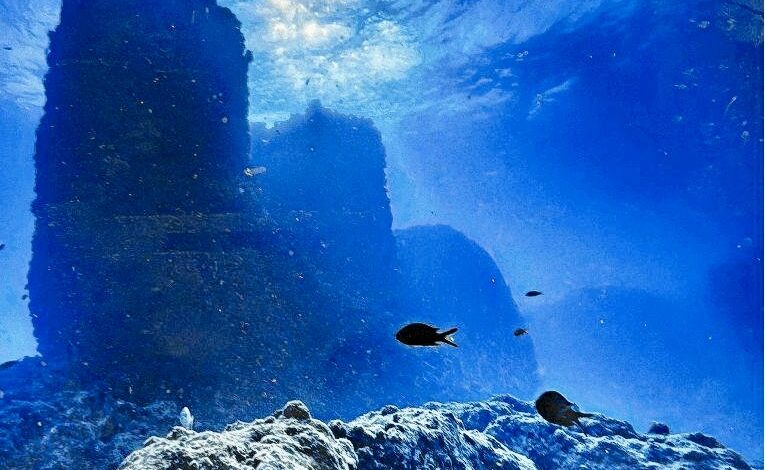
The Dominican archaeological mission working at the site of Taposiris Magna Temple, west of Alexandria, has announced new underwater findings that confirm the existence of a submerged ancient port connected to the temple and directly linked to the Mediterranean Sea.
The mission, led by Dr. Kathleen Martinez of Universidad Nacional Pedro Henriquez Ureña, in collaboration with Dr. Robert Ballard — founder and CEO of the Ocean Exploration Trust — conducted a detailed geological and archaeological survey that revealed the remains of a protected inner harbor.
Evidence of a Harbor Complex
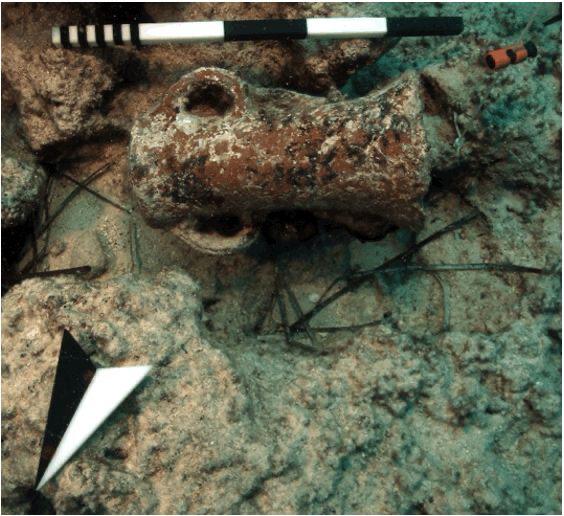
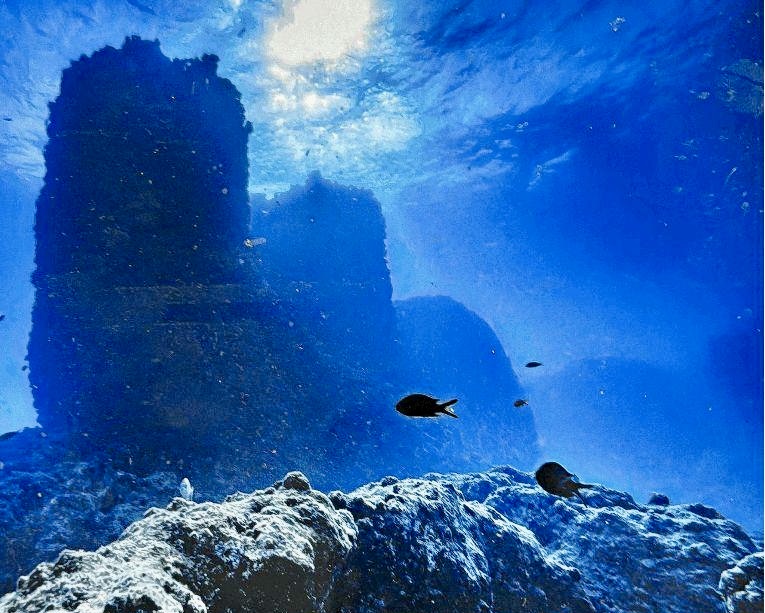
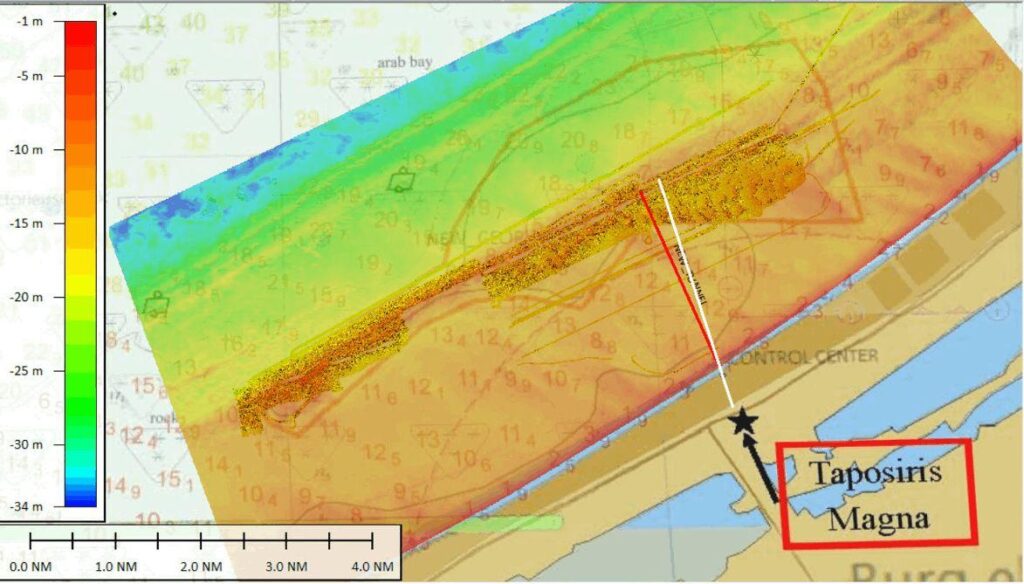
According to the research team, the harbor was shielded by natural coral reefs, and the seabed yielded a collection of stone and metal anchors of various sizes, along with a large quantity of amphorae dating to the Ptolemaic period. The survey also confirmed that the ancient coastline once lay nearly four kilometers north of today’s shoreline — an indication of significant geological change since antiquity.
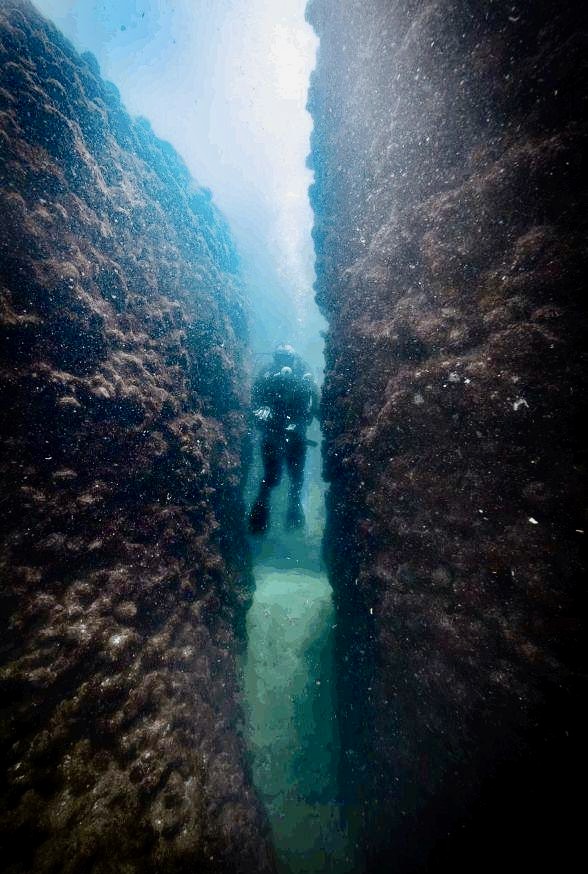
The investigation further revealed an extension of a tunnel running from the Taposiris Magna Temple toward the Mediterranean, reaching as far as the area known as “Salam 5,†where divers uncovered additional archaeological material suggesting maritime activity in antiquity.
A Strategic Maritime Hub


H.E. Sherif Fathy, Minister of Tourism and Antiquities, stated that the discovery highlights Egypt’s deep maritime history and confirms that its ancient coastlines were not only cultural centers but also strategic gateways for trade and cultural exchange with the wider Mediterranean world. He reaffirmed the Ministry’s commitment to supporting research projects that shed light on Egypt’s submerged heritage.
Dr. Mohamed Ismail Khaled, Secretary-General of the Supreme Council of Antiquities, described the find as a major contribution to Egypt’s maritime archaeology. “No ancient sources had previously referred to a port at this site,†he said, adding that the discovery enhances our understanding of the economic and religious infrastructure of the region and reinforces Egypt’s historical role as a global hub for maritime activity.
Continuing the Search for Cleopatra’s World
Dr. Kathleen Martinez emphasized that these results represent a new chapter in the study of Taposiris Magna and its environs. “Our mission will continue to explore and document the site’s rich archaeological record, revealing more about its role in the late Ptolemaic period,†she said.
Last year, the same mission uncovered foundation deposits beneath the southern wall of the temple’s outer enclosure, including a variety of ritual and funerary artifacts: 337 coins (many bearing the likeness of Queen Cleopatra VII), ceramic ritual vessels, oil lamps, limestone food containers and cosmetic jars, bronze statues, a scarab amulet inscribed with the phrase “The justice of Ra has shoneâ€, and a bronze ring dedicated to the goddess Hathor. The team also documented pottery sherds and architectural remains that date the temple walls to the 1st century BCE and identified remains of an earlier Greek-period temple, built in the 4th century BCE and destroyed between the 2nd century BCE and the start of the Roman era.