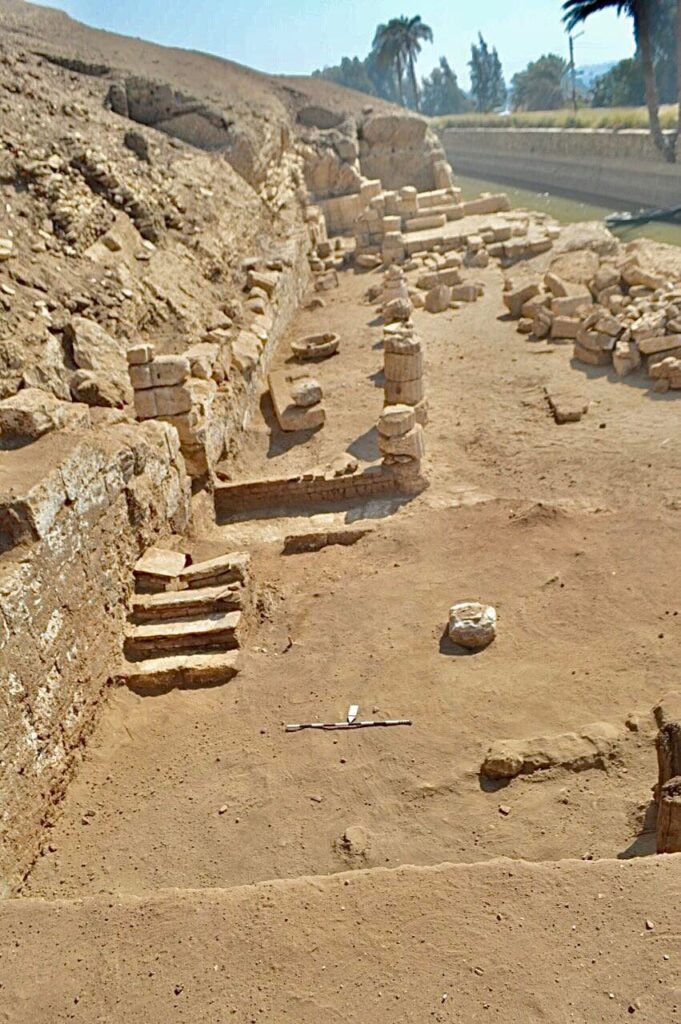
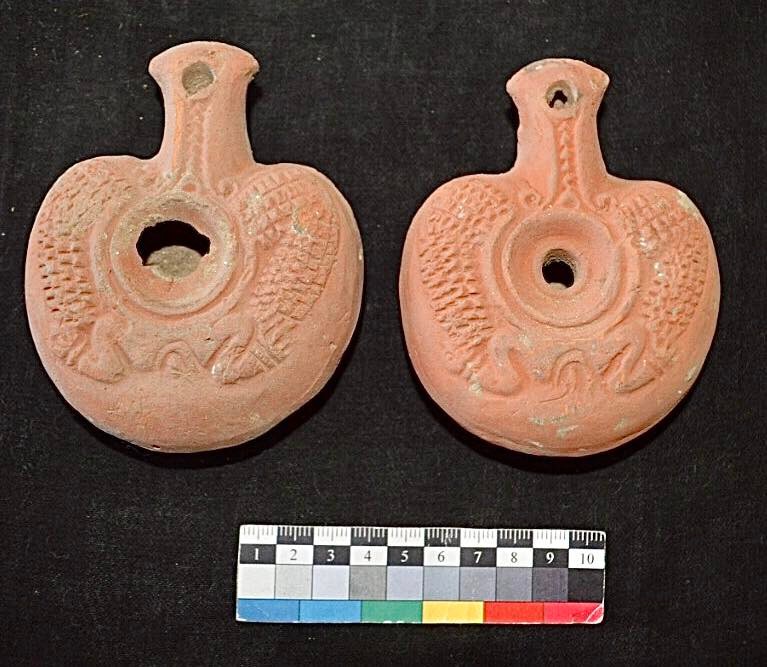
Dr. Mostafa Waziry said that the Egyptian archaeological mission at Gebel El-Haridi in Sohag discovered a tower house at an observation and check point dated to the reign of Ptolemy III as well as unearthed the remain of the Ptolemaic temple dedicated to Goddess Isis which parts of it were discovered during early 2000s. The preliminary surveys of Gebel El-Haridi showed archaeological material dated to 6th Dynasty of the Old Kingdom to be late Roman Period and Coptic era too. The earliest mention of the site is by Richard Pococke in 1763 and it was mentioned by the scientists of the Napoleonic campaign in 1798. EES (Egypt Exploration Society) excavated the site between December 1991 till August 1998 directed by Dr. Christopher Kirby.
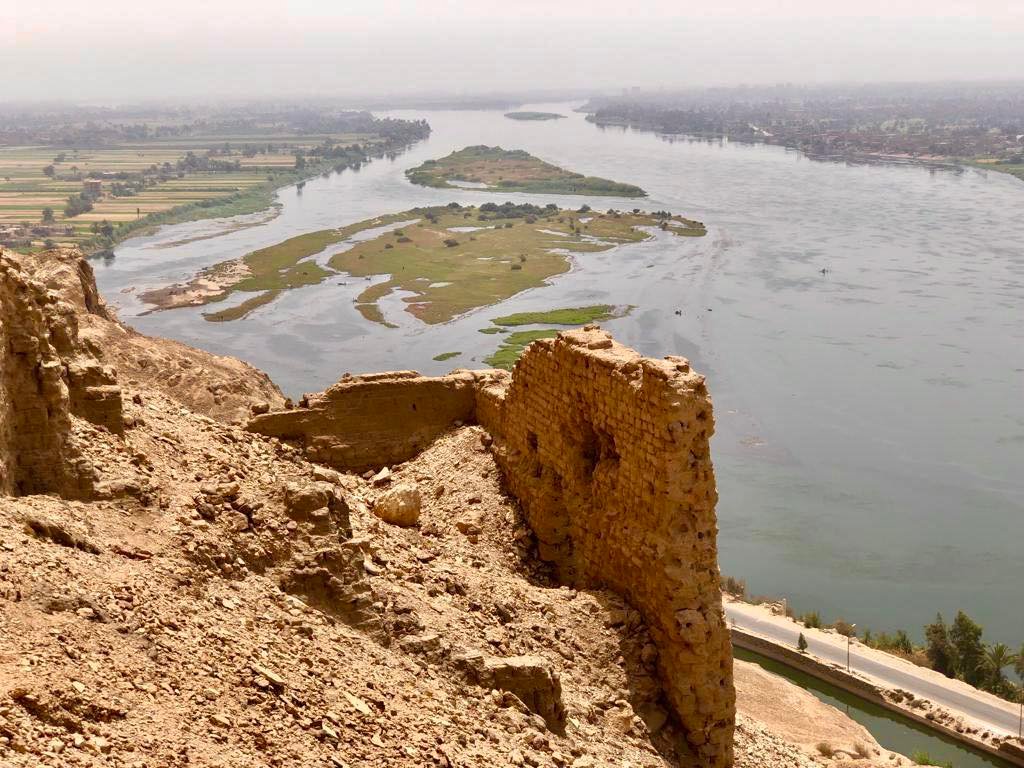
The check point discovered is a mud-brick structure (Tower House) which was built to observe and watch the traffic between nomes borders, collect taxes and secure the boats sailing the Nile. The discovered temple dedicated to Isis dated to the reign of Ptolemy III (Euergetes) 246 B.C – 222 B.C and it measure 33 meters length and 14 meters width with north to south axis.
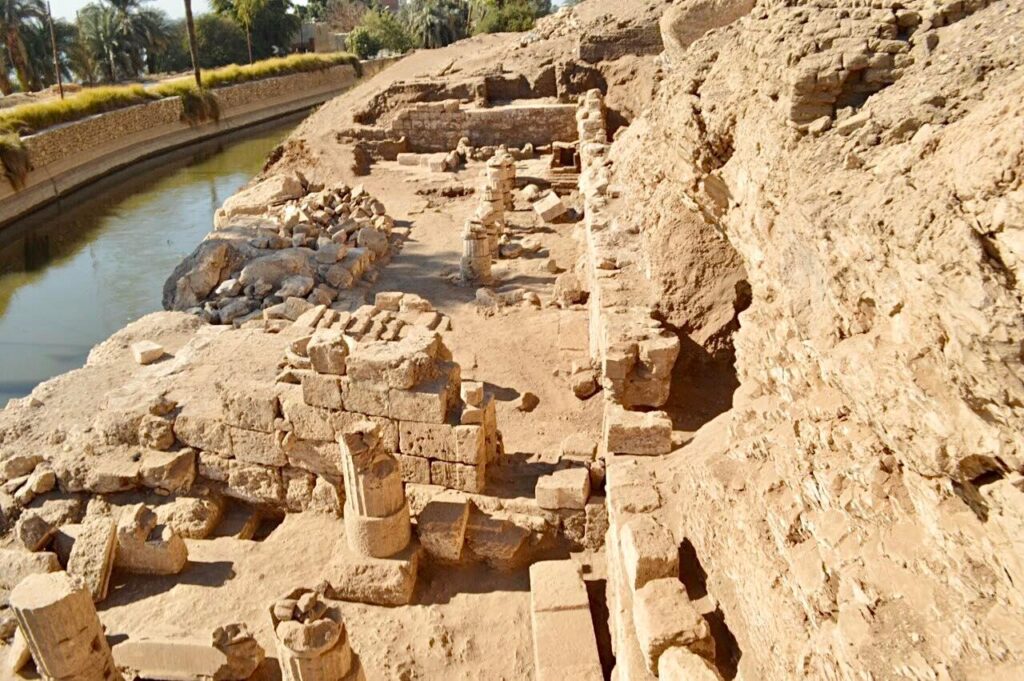
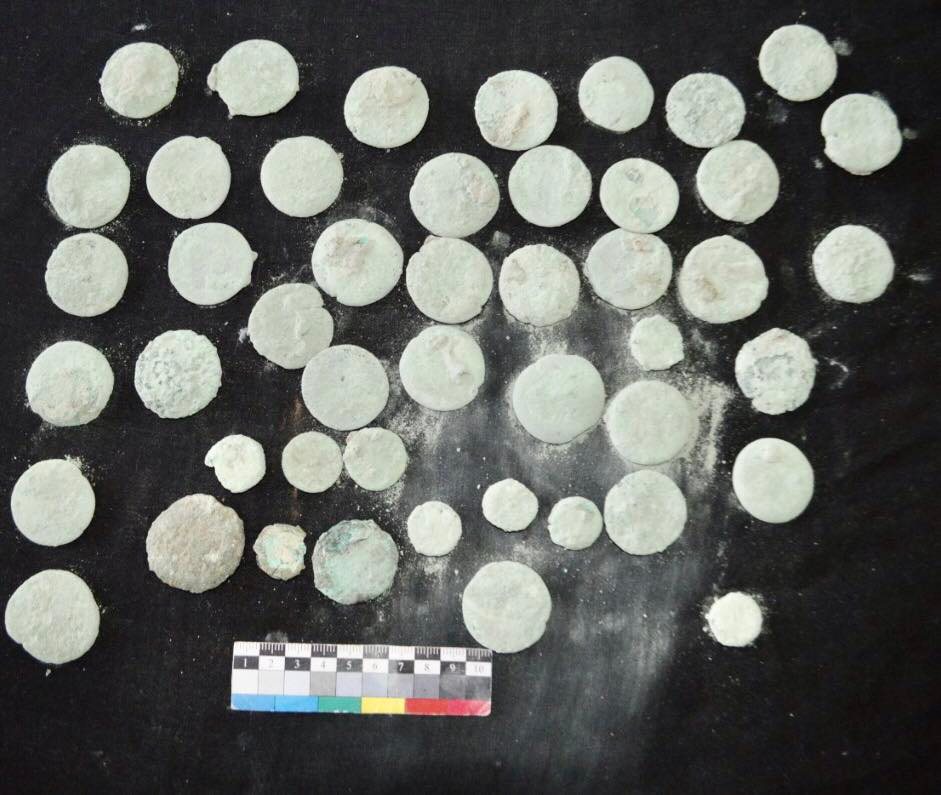
Dr. Aiman Ashmawi said that the layout of the temple consists of a rectangular court yard with 4 columns in the middle then a hall with two columns leads to the holy of the holies. At the center of the temple from the west a staircase with limestone blocks for the temple floors. During the excavations, the team discovered a limestone purification basin and votive stela at the north of the temple as well as 5 ostraca with demotic inscriptions, 38 Roman coins and animals bones which the study showed that it was food for the temple priests.


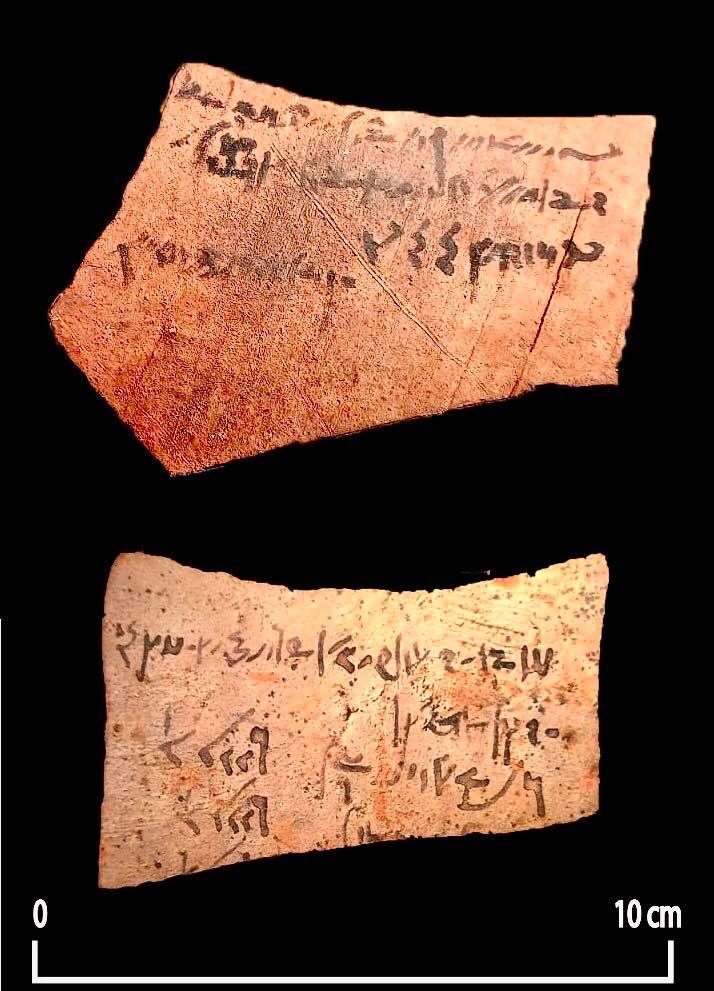
Mr. Mohamed Abdelbadie said that the mission discovered a house of the workers overseer and a number of disconnects with the workers names, salaries and tasks. The mission also discovered about 85 tombs dated to different eras from the end of Old Kingdom to Ptolemaic. The tombs vary in their plans, some are rock cut in different levels of the mountain, some with one or several burial shafts and other tombs with a sliding corridor leading into a burial chamber. Inside the Ptolemaic tombs, human remains and mummies remains discovered with a number of 30 mummies cards which is like a permit for the burial and they are written in Ancient Greek, hieratic or demotic fonts.
Those cards usually bear the name of the deceased, the father or mother name, where from, job and age at the time of death alongside ancient Egyptian gods hymns and prayers. The archaeological team also finished documenting a number of quarries at the site including Ramses III quarry of the 19th Dynasty. The mission finished the cleaning and preservation of Ramses III’s stela which was mentioned in papyrus Harris “Ramses III sent 38 quarry craftsmen to this site “Gebel ElHaridi†to cut stones to build a temple for him in the 10th nome.â€As well as 3 Ptolemaic quarries of Ptolemy III, Ptolemy IV, Ptolemy V and Ptolemy XII.