
Preliminary studies indicate she died before reaching the age of 40.
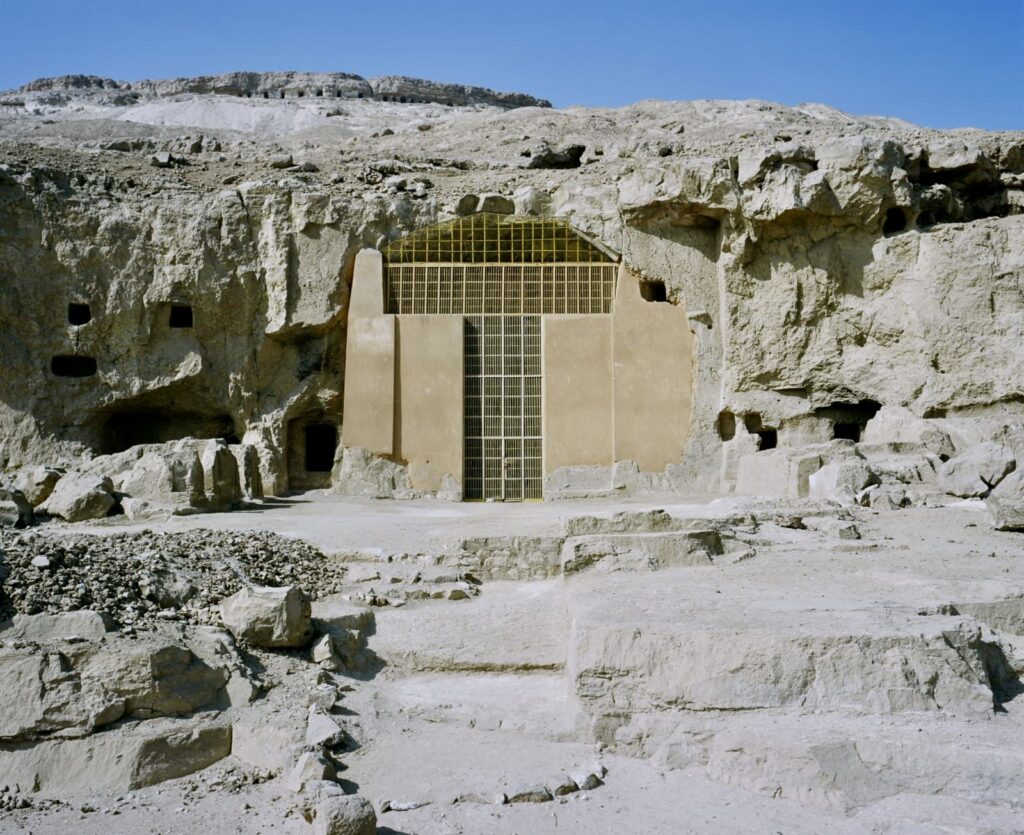
A joint Egyptian-German archaeological mission from Sohag University and the University of Berlin, has uncovered the burial chamber of a woman named “Iti,” the only daughter of the governor of Assuit during the reign of King Senusret I, known as “Khafay-Hapi.” The discovery was made during the mission’s archaeological cleaning of his tomb, which is considered the largest non-royal tomb in Egypt from that era.
The grandeur of the tomb highlights Khafay-Hapi’s status as one of the most significant provincial governors in ancient Egypt.
Sharif Fathy, Egypt’s Minister of Tourism and Antiquities, praised the efforts of Egyptian archaeological missions in revealing more secrets of Egypt’s ancient history. He emphasized that the ministry would continue to fully support these missions to help them complete their work in the best possible way.
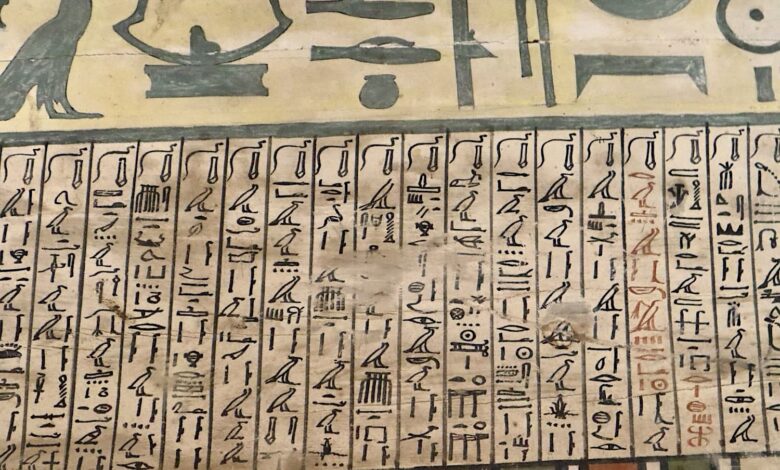
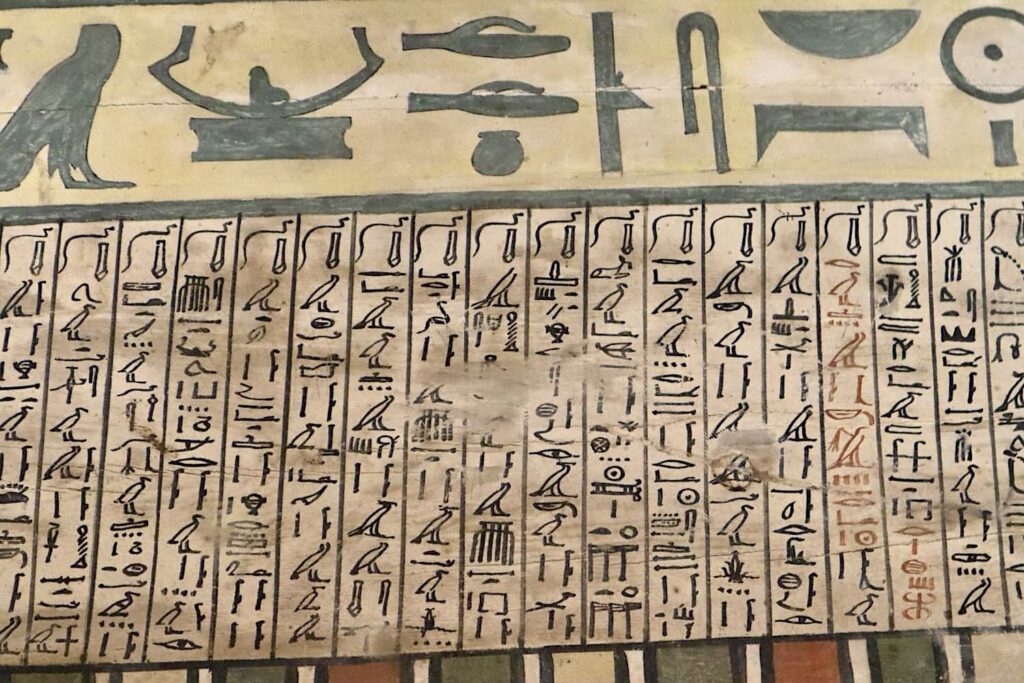
Dr. Mohamed Ismail Khaled, Secretary-General of the Supreme Council of Antiquities, explained that while the mission was cleaning the remaining shaft in Khafay-Hapi’s tomb, they discovered his daughter’s burial chamber at a depth of approximately 15 meters to the north. Inside were two nested coffins, intricately inscribed both inside and out with texts describing the journey to the afterlife.
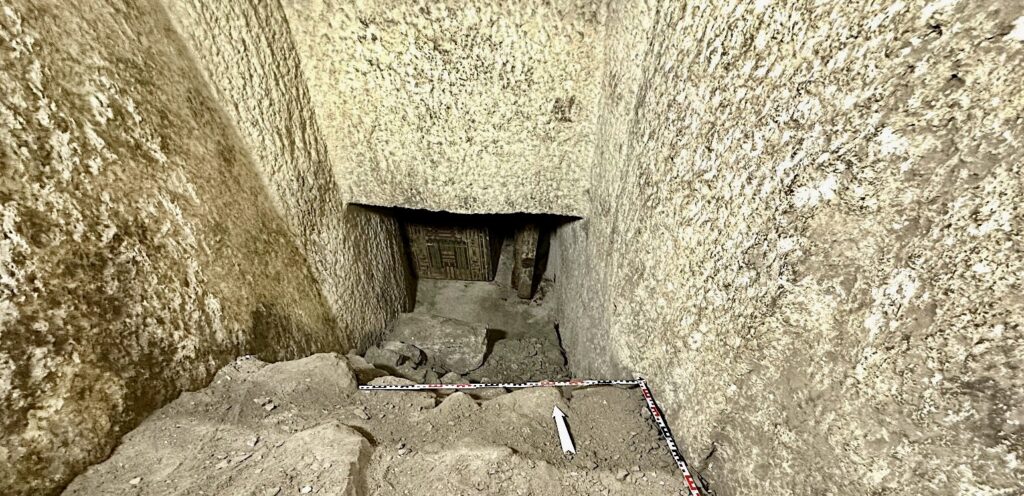
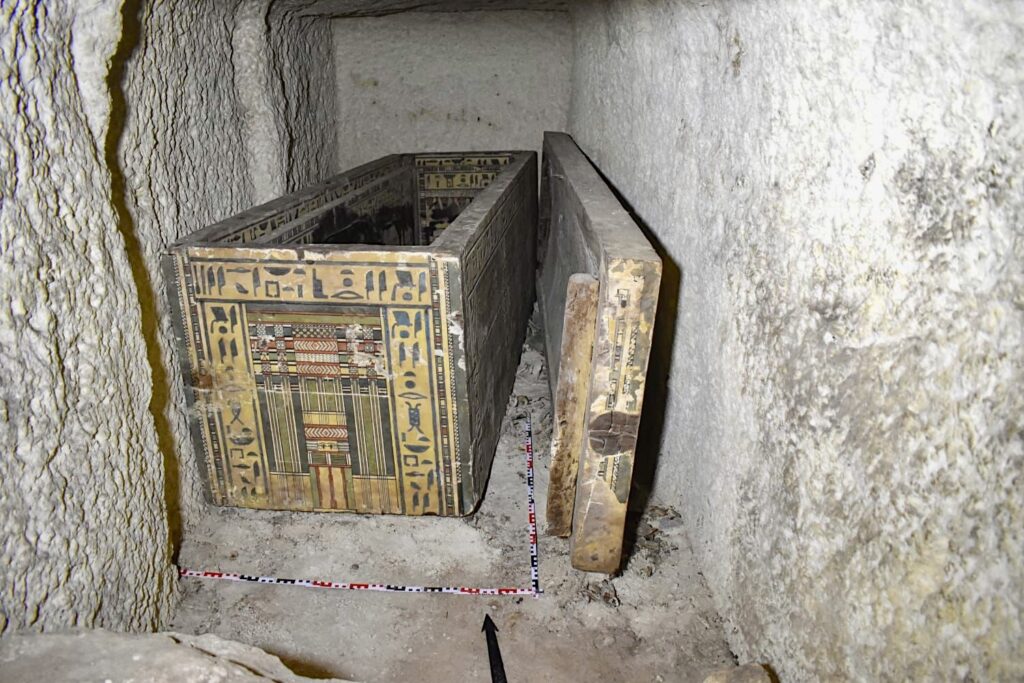
The smaller coffin measures 2.30 meters, while the larger one is 2.62 meters in length. Both are considered among the finest coffins ever discovered. The team also found the lid of the smaller coffin, a canopic jar chest, and wooden funerary statues.


Dr. Khaled added that preliminary studies of the burial chamber indicate that ancient tomb robbers had accessed the chamber, desecrating the mummy of the woman and destroying her canopic jars. Initial examinations of her skull and remaining bones suggest that she died at a young age, before reaching 40, and suffered from a congenital foot deformity. The mission will continue its cleaning and scientific study of the bones in hopes of uncovering more information about this governor, his daughter, and the historical period in which they lived.