
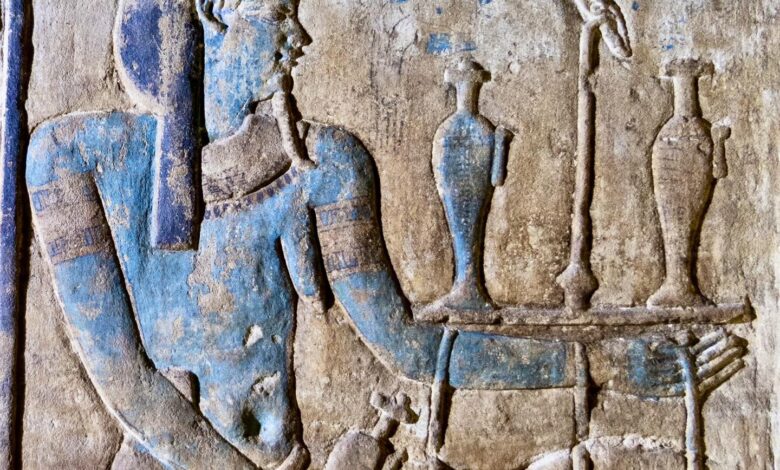
The newly discovered inscriptions will contribute to forming new perspectives on the religious practices of priests during the Ptolemaic era.
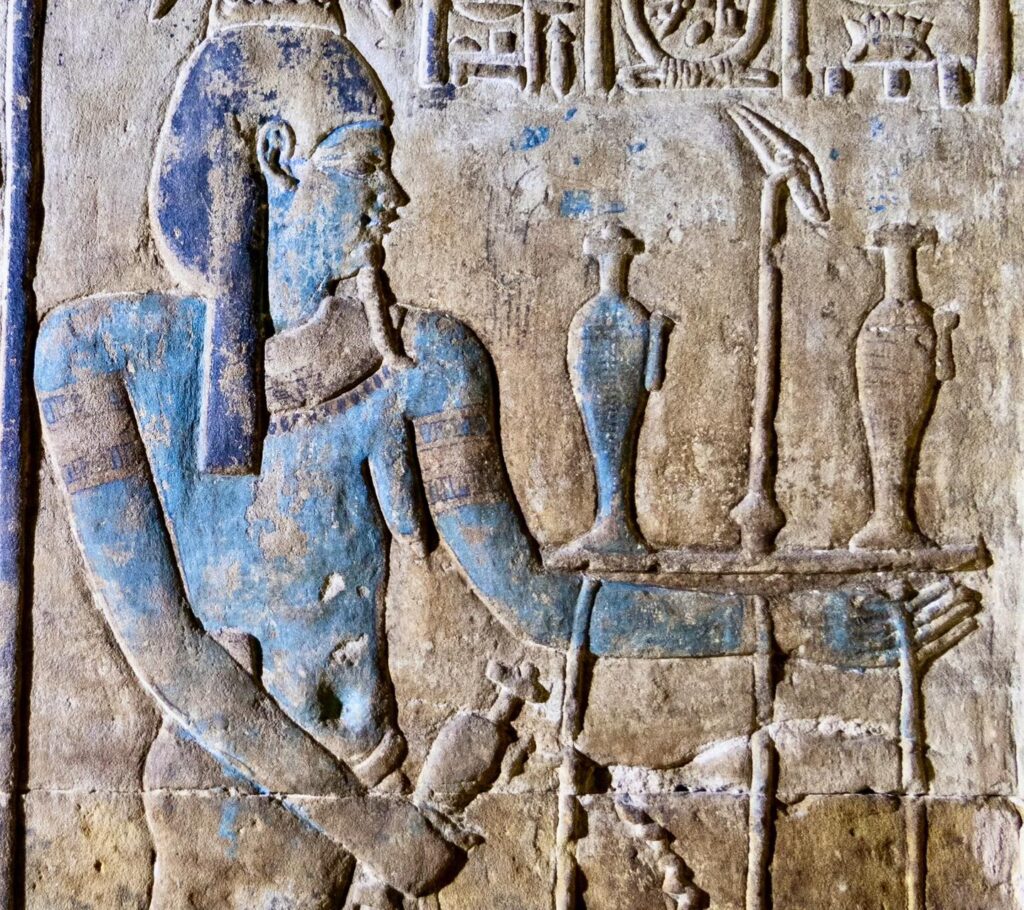
The Minister of Tourism and Antiquities praises the efforts of restorers in preserving Egypt’s cultural heritage and restoring the original colors of temples.
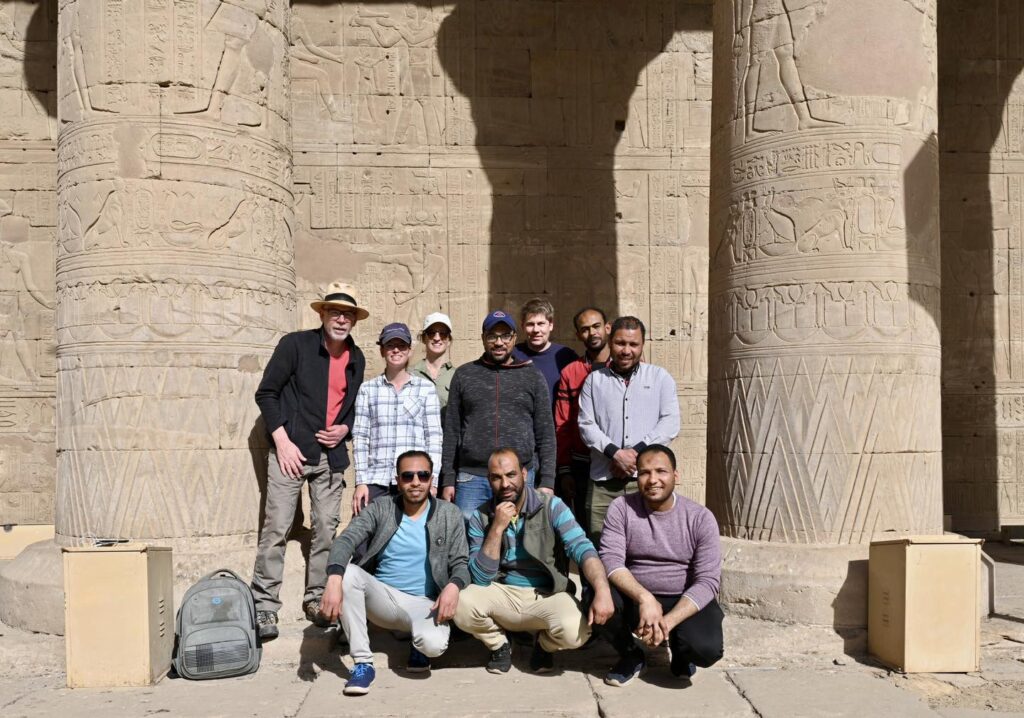
The joint archaeological mission of the Supreme Council of Antiquities and the University of Würzburg, Germany, has successfully revealed the original colors of Edfu Temple, along with several inscriptions appearing for the first time during the restoration project of the temple’s surface dedicated to the worship of the god Horus. The project began in 2021 with funding from the Gerda Henkel Foundation in Germany.
Mr. Sherif Fathy, Minister of Tourism and Antiquities, praised the efforts of restorers, especially Egyptians, in preserving Egypt’s cultural heritage and their outstanding efforts to reveal all the inscriptions in Egyptian temples and restore the original colors that adorned them thousands of years ago. He described it as a remarkable effort to remove the archaeological layers that covered the temples for many years, followed by meticulous treatments to restore these colors to their original state. He also stressed the need to expedite the completion of the work in preparation for the winter tourism season and the reception of both Egyptian and international visitors.
Dr. Mohamed Ismail Khaled, Secretary-General of the Supreme Council of Antiquities, explained that the temple restoration project is part of the Ministry of Tourism and Antiquities’ strategy to preserve Egypt’s cultural and civilizational heritage, which belongs to humanity as a whole. The project aims to clean the temple walls, republish its texts and scenes, and document them digitally in new publications with more accurate translations and studies than those previously published in the last century. The project also includes restoring and cleaning the temple’s inner sanctuaries and walls, fixing the colors, removing soot, and conducting detailed studies of the texts and scenes on the walls of the Holy of Holies and the adjacent rooms.
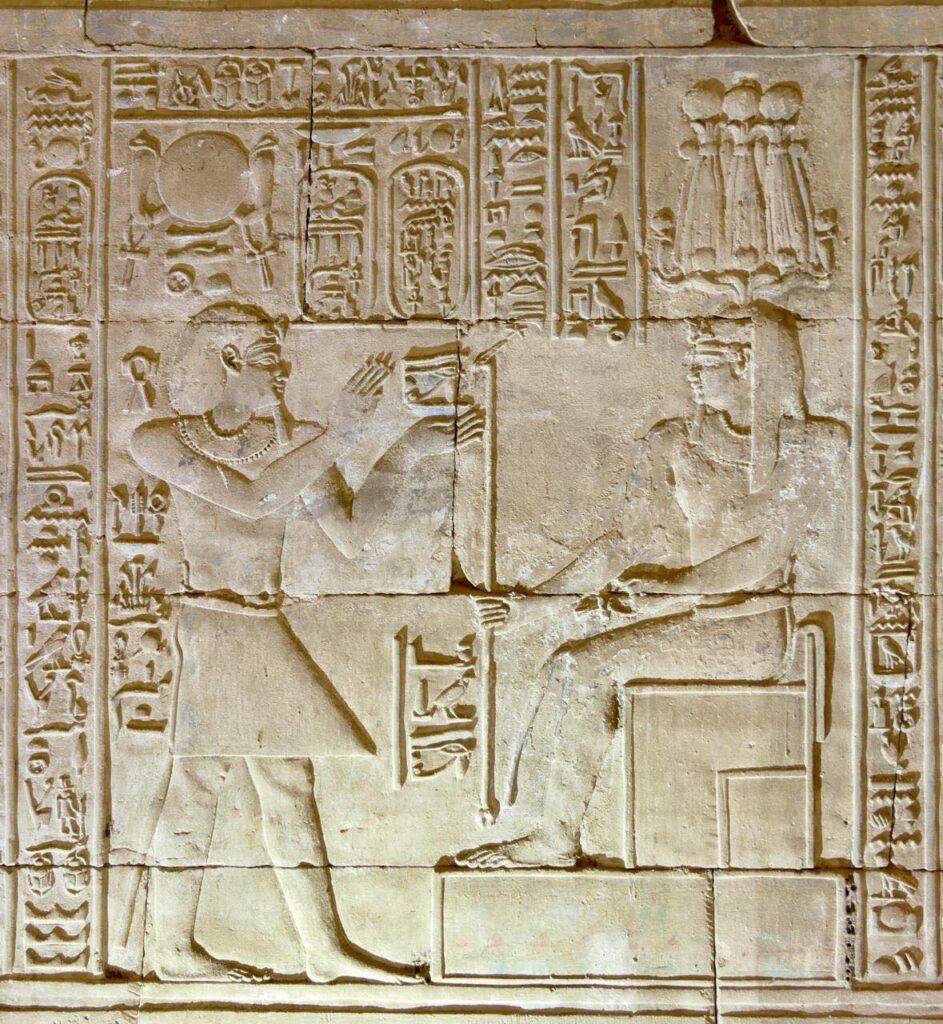
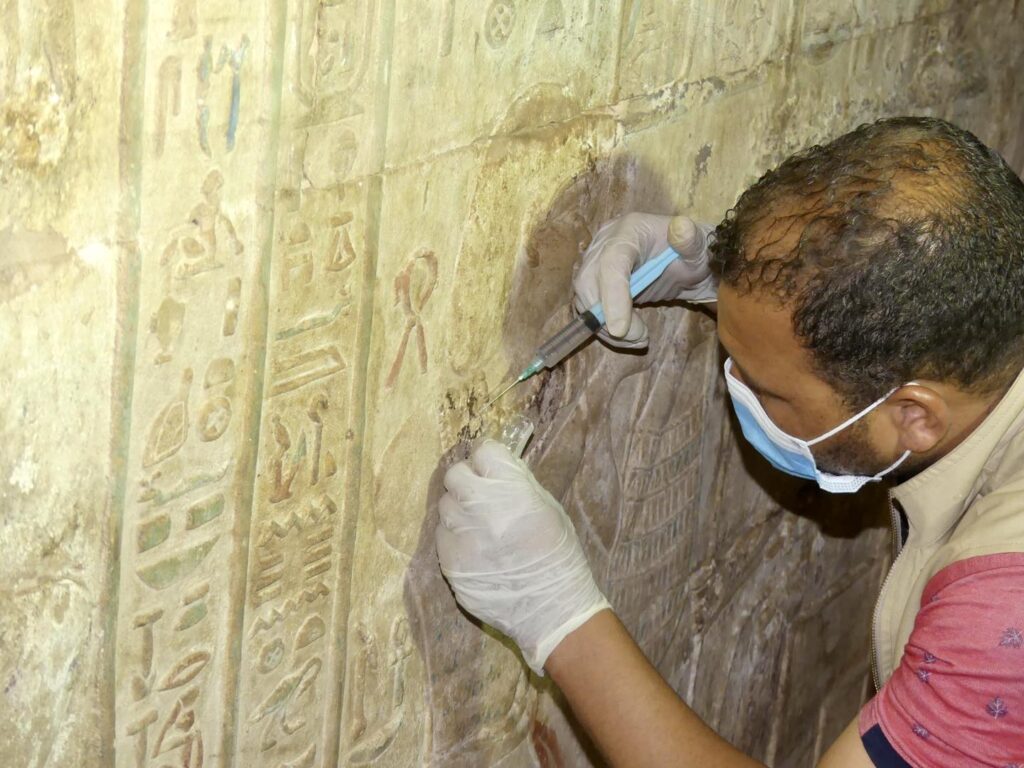
The Secretary-General noted that during the restoration of the ceiling and walls of the Holy of Holies, remains of colored scenes and inscriptions written by priests in the Demotic script were uncovered, along with traces of gold leaf used to gild the raised reliefs of jewelry, royal emblems, and the bodies of gods.


He praised the efforts of the restoration team in revealing the inscriptions and colors, which will significantly help return the temple to its original state when it was built. This effort not only preserves the temple and its inscriptions but also enhances the visitors’ experience.
Dr. Ayman Ashmawy, Head of the Egyptian Antiquities Sector at the Supreme Council of Antiquities, stated that the temple’s texts indicate that some of its buildings were covered with thick copper (gilded) sheets, which have only left behind groups of holes in the walls, leading to their rarity in archaeological records. He pointed out that the Egyptian-German team succeeded in uncovering this type of gilding in several places on the upper parts of the walls of the sacred boat shrine within the temple.
Project supervisor Ahmed Abdel Nabi mentioned that the team removed dirt, bird droppings, dust, soot, and salt deposits, which resulted in the discovery of the remains of the original colors that once covered the raised reliefs. He explained that the colors are currently being analyzed and restored to bring the scenes back to their original appearance when the temple was constructed.
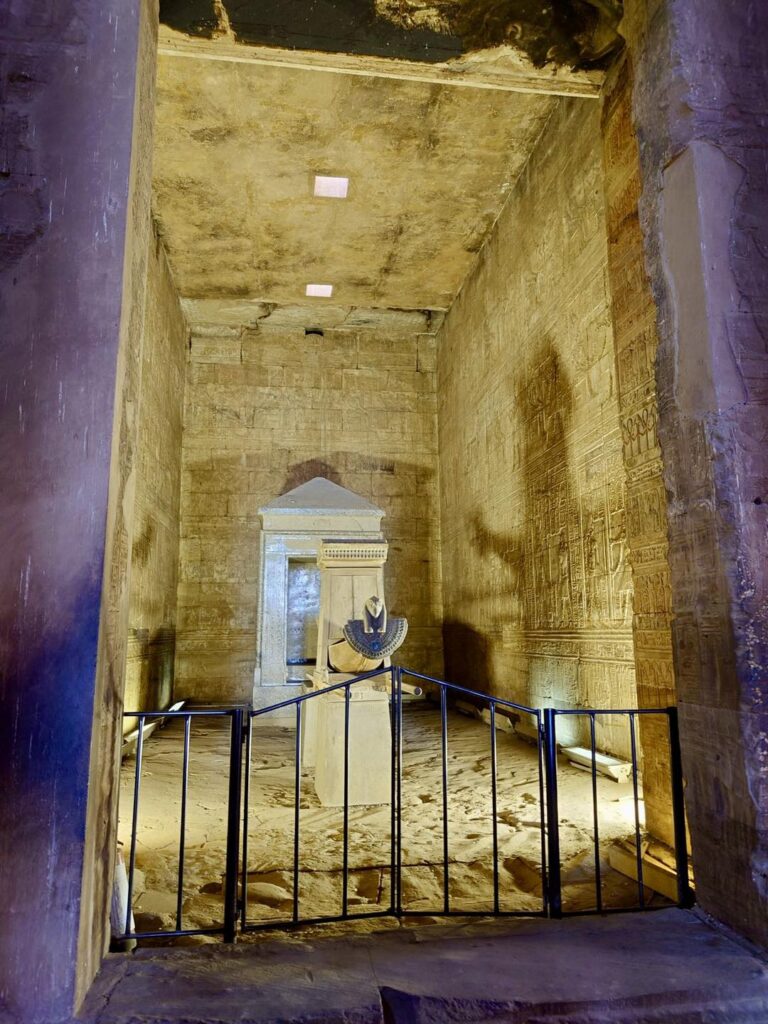
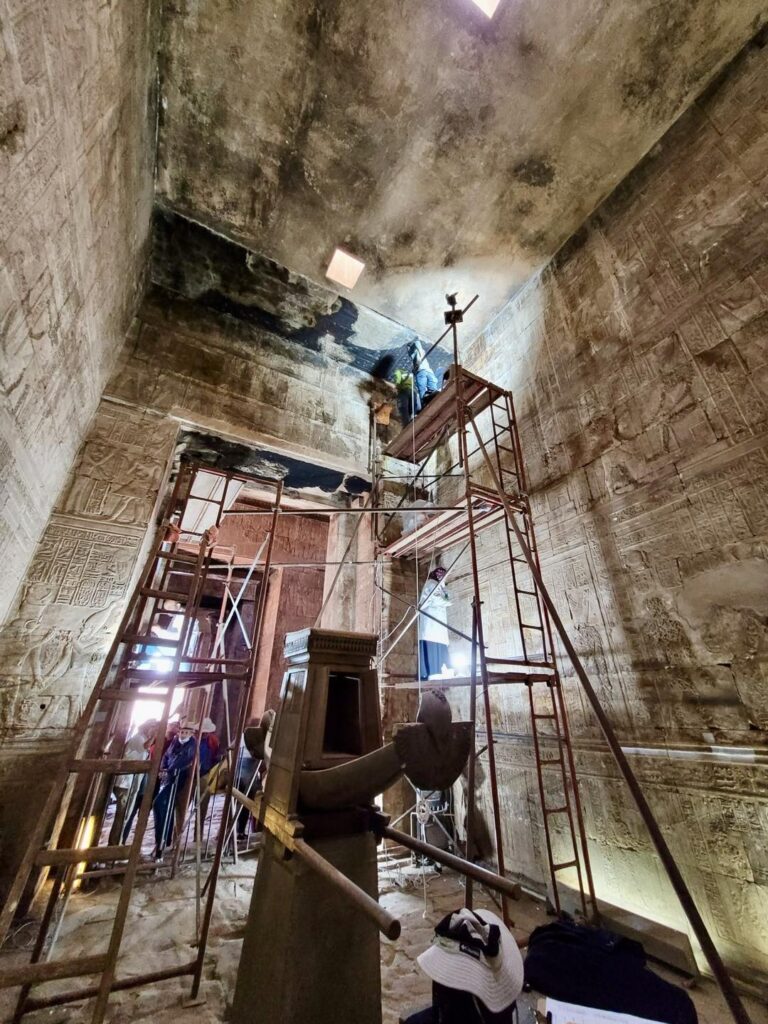
Dr. Martin Andreas Stadler, the project leader and head of the Egyptology Department at Julius Maximilian University of Würzburg, stated that the quality of the temple’s colors reflects the advancement of Egyptian art. He noted the discovery of a Demotic text written in ink that was completely hidden under the dirt. This text, which talks about the priests entering the Holy of Holies, is unique because personal writings typically appear on the outer surroundings of the temple or its entrances, not in the main chamber or the Holy of Holies, where the sacred boat and statue of the god are located. He emphasized that these newly discovered texts will contribute to forming new insights into the religious practices of priests during that time.
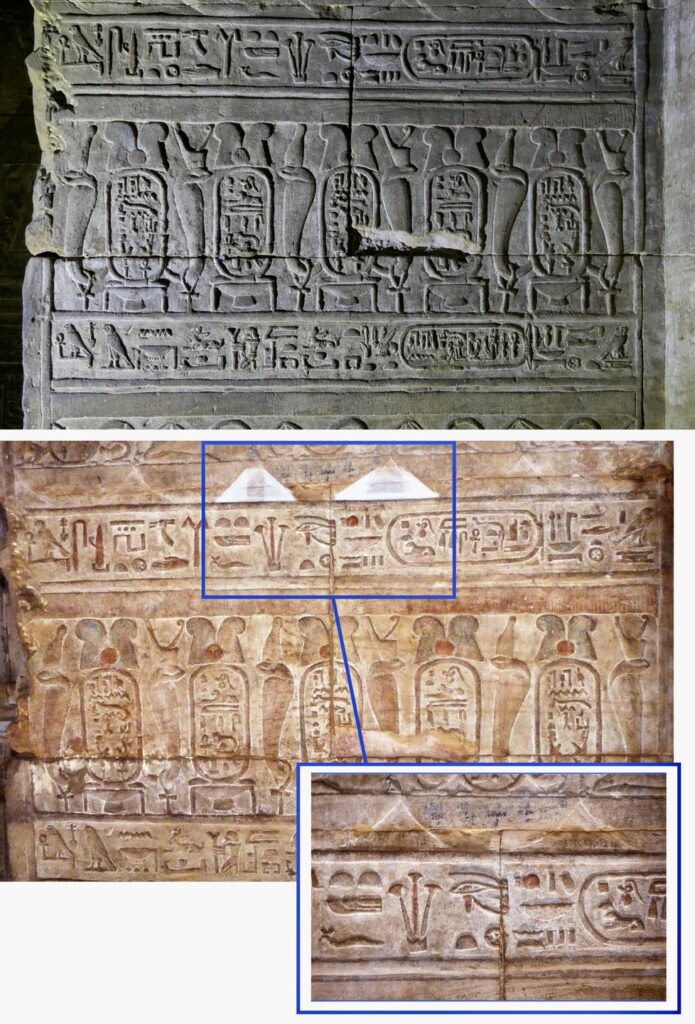
Victoria Altmann-Wendling, the project director and researcher at Julius Maximilian University of Würzburg, added that uncovering the original colors of the inscriptions has greatly helped reveal more details of the scenes and hieroglyphic writings that were not visible in the raised reliefs. Additionally, it has given the Holy of Holies a unique aura, especially when sunlight enters it.
The “Horus of Behdet” Temple in Edfu is one of the best-preserved temples in Egypt. It contains a collection of inscriptions and drawings that record important information about the ancient Egyptian language, mythology, and religious beliefs and practices.
It is the second-largest temple in ancient Egypt in terms of size.
Construction of the temple began during the reign of Ptolemy III Euergetes and was completed during the reign of Ptolemy XII.
The temple is a unique monument of ancient religion and architecture, with its vibrant and brilliant colors adding a special charm.