
Military Barracks and Weapons Storage Discovered by Egyptian Archaeologists at the Site of Tell El-Abqain, Hosh Issa in Beheira Governorate
A Bronze Sword of King Ramesses II and Archaeological Finds Provide Evidence of the Historical and Archaeological Significance of the Fortress
The Egyptian archaeological mission of the Supreme Council of Antiquities and headed by Dr. Ahmed Saeed El-Kharadly, has uncovered a series of mudbrick architectural units, including military barracks for soldiers and storage facilities for weapons, food, and supplies from the New Kingdom period. This discovery was made during excavation work at the Tell El-Abqain archaeological site, located in the Hosh Issa district of Beheira Governorate. Numerous artifacts and personal items belonging to soldiers were also uncovered.
Dr. Mohamed Ismail Khaled, Secretary-General of the Supreme Council of Antiquities, emphasized the importance of this discovery, as it confirms the historical and archaeological significance of the Abqain Fortress. This fortress was a key military outpost for the ancient Egyptian army along the western military road, protecting Egypt’s northwestern borders from attacks by Libyan tribes and Sea People.
The uncovered architectural units are arranged in a regular layout, divided into two symmetrically designed groups separated by a narrow passage. This layout reflects the ingenuity of ancient Egyptian architects in utilizing and adapting the surrounding environment to serve their various purposes.
Dr. Ayman Ashmawy, Head of the Egyptian Antiquities Sector at the Supreme Council of Antiquities, stated that preliminary studies of the discovered artifacts indicate that some of the architectural units were used as storage facilities to supply soldiers with daily food and provisions. Large individual silos were found inside these units, containing remains of large pottery vessels used for storage, which held remnants of fish and animal bones, as well as pottery shards. In addition, cylindrical clay ovens used for cooking were also discovered.


The mission also uncovered a long bronze sword decorated with the cartouche of King Ramesses II, along with a collection of artifacts shedding light on the daily activities of the fortress’s inhabitants, as well as their religious and military practices. These included weapons used in warfare, hunting tools, personal adornments, and hygiene items such as ivory kohl applicators, beads, and scarabs made of red agate and faience, as well as protective amulets.
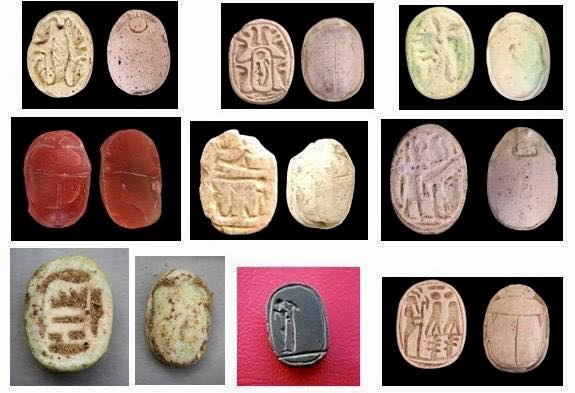
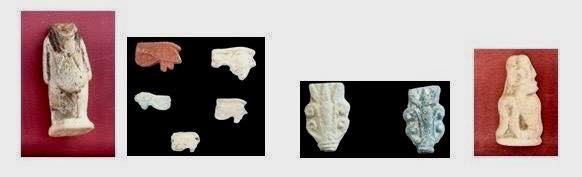
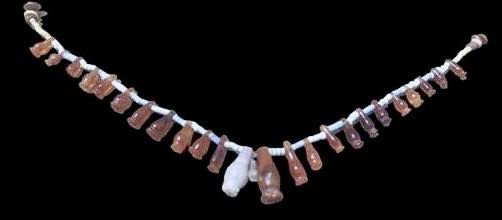
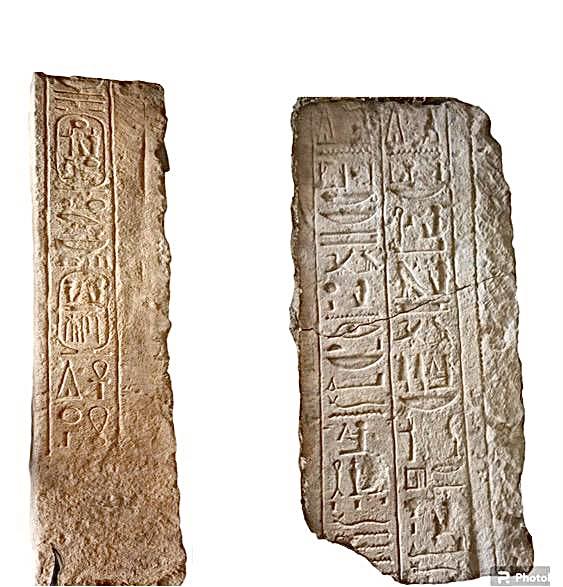
One of the most significant finds in the fortress was the burial of a cow, symbolizing strength, abundance, and prosperity, attributes associated with the cow as a celestial deity. The team also discovered two limestone blocks, one inscribed with the hieroglyphic titles of King Ramesses II and the other bearing the name of an official called “Bay.” Additionally, a faience scarab inscribed with “Amun – Lord of the Sky,” topped with a lotus flower, was found, along with another scarab bearing an image of the god Ptah carved from schist, half of a bronze ring inscribed with the god “Amun-Horakhty,” and two necklaces made of faience and agate in the shape of pomegranate flowers.