
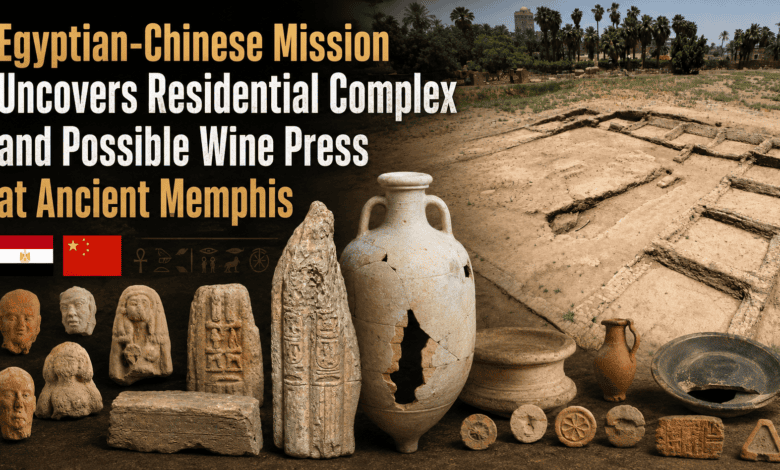
Excavations near the Temple of Sekhmet at Mit Rahina have revealed mud-brick residential structures, a limestone installation believed to have been used for wine production, and a diverse collection of archaeological finds spanning several periods of ancient Memphis.
An Egyptian-Chinese archaeological mission working at the Temple of Sekhmet in Mit Rahina has uncovered a series of important archaeological remains and artefacts that are providing new evidence about the history of the area and the nature of life at ancient Memphis across successive periods.
The joint mission, conducted by Egypt’s Supreme Council of Antiquities and the Shanghai Museum in China, made the discoveries during its ongoing work at the Temple of Sekhmet and the surrounding area.
Sherif Fathy, Egypt’s Minister of Tourism and Antiquities, welcomed the archaeological cooperation between Egypt and China, describing the two countries as home to two of the world’s oldest civilisations.
He said the mission represents one aspect of the wider cooperation between Egypt and China in archaeology, which includes several archaeological projects and joint Egyptian-Chinese missions.
Excavations Around the Temple of Sekhmet


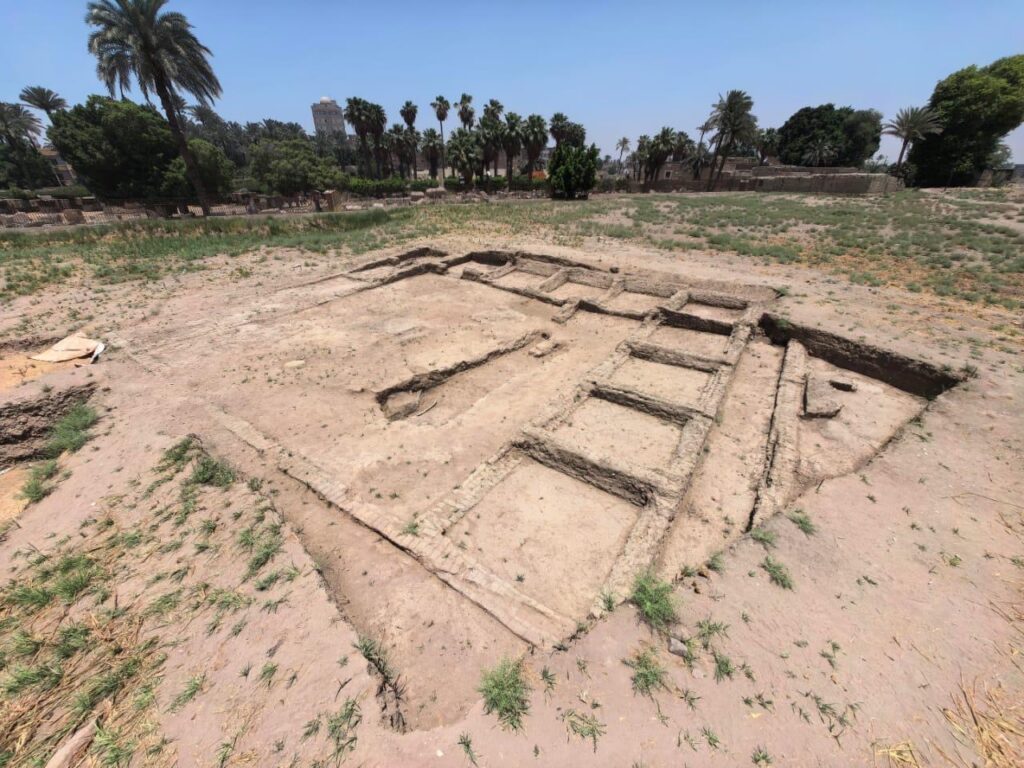
Dr Hisham El-Leithy, Secretary-General of the Supreme Council of Antiquities, said the mission began its work by cleaning and documenting the Temple of Sekhmet, which formed part of the great Temple of Ptah complex at Memphis.
Excavations were also conducted in the areas surrounding the temple to identify archaeological features and better understand how this part of the ancient city was used through different periods.
Among the most significant discoveries are the remains of a mud-brick residential complex in the area surrounding the temple.
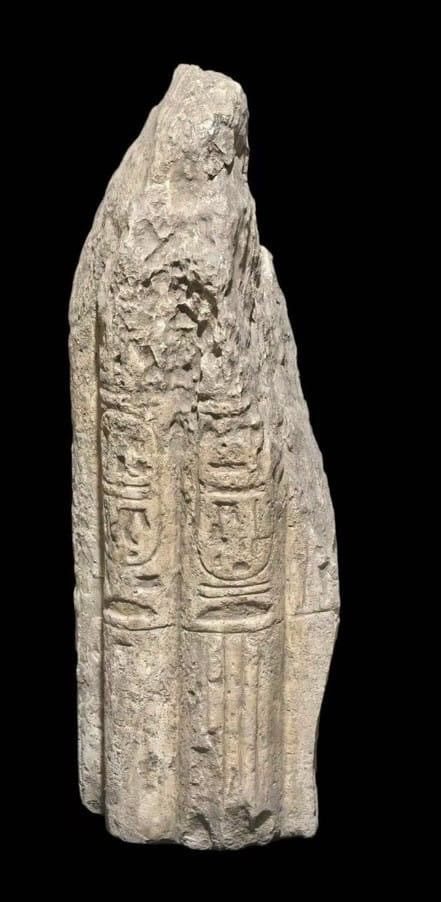
The mission also uncovered a number of stone blocks and fragments of statues. Some of these are believed to have originally formed part of the great Temple of Ptah, the principal temple of ancient Memphis, of which the Temple of Sekhmet was a component.
Possible Evidence for Wine Production
Excavations to the east of the temple revealed a limestone installation that archaeologists believe may have been used as a wine press.
The structure consists of an upper basin sloping southwards towards a central opening and a lower collection basin. Each has an opening designed to secure amphorae used for collecting or filling the liquid.
Grape seeds discovered inside the installation provide additional evidence supporting its interpretation as a facility associated with wine production.
The identification remains an archaeological interpretation rather than a definitive conclusion, but the combination of the installation’s design and the presence of grape seeds strengthens the possibility that wine was produced or processed at the site.
Finds Dating Mainly to the New Kingdom
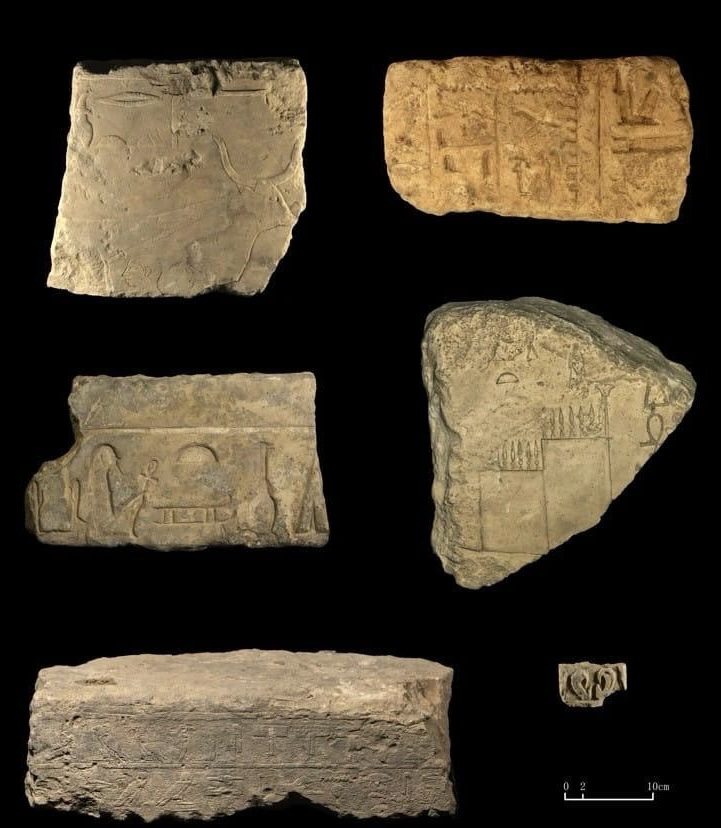
The excavations also produced a diverse collection of archaeological material, including stone blocks and statue fragments, most of which date to the New Kingdom and particularly to the reign of Ramesses II.
The objects were made from several types of stone, including limestone, red granite and schist.
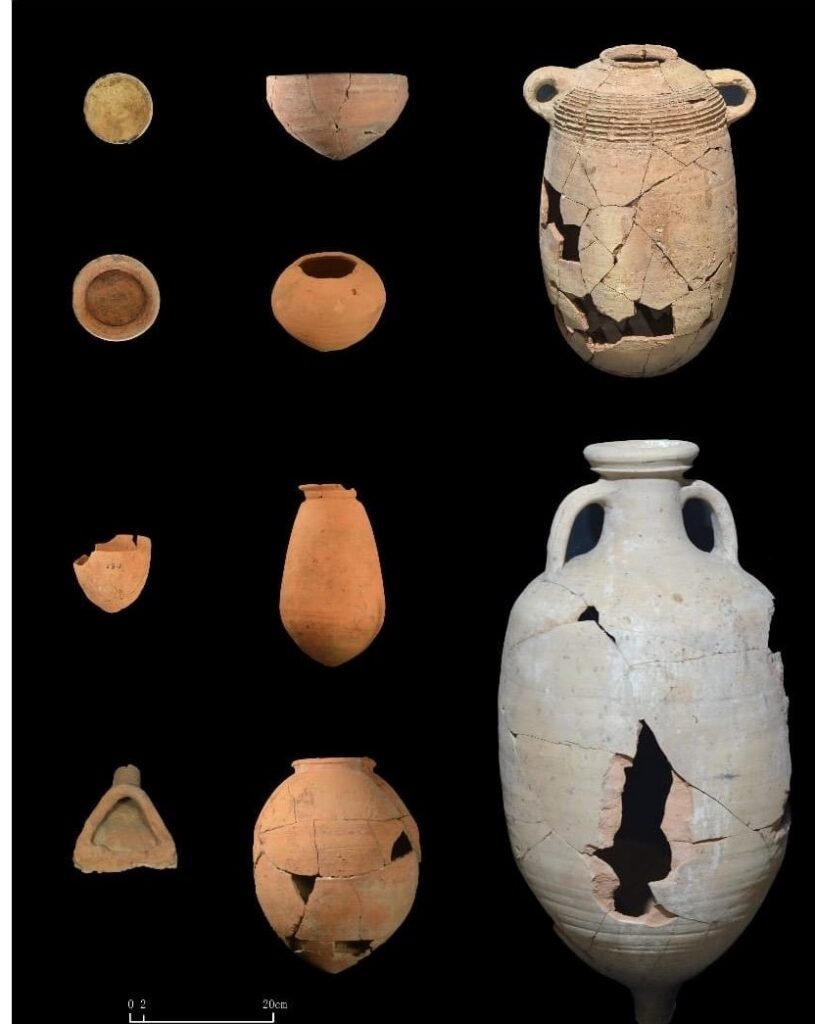
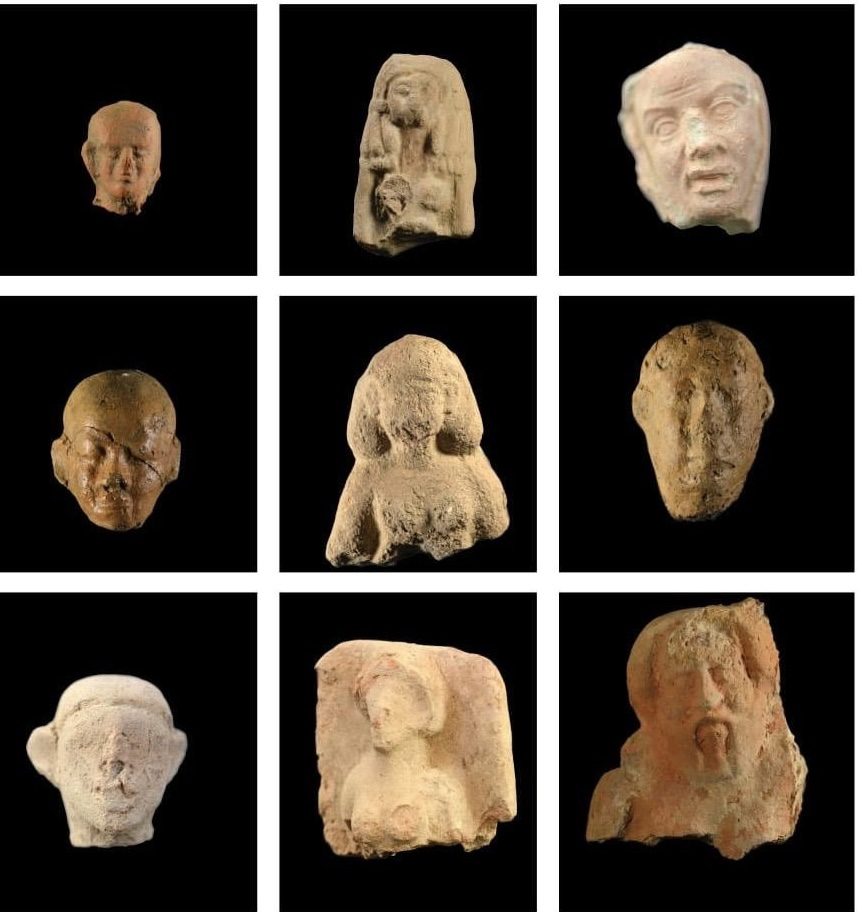
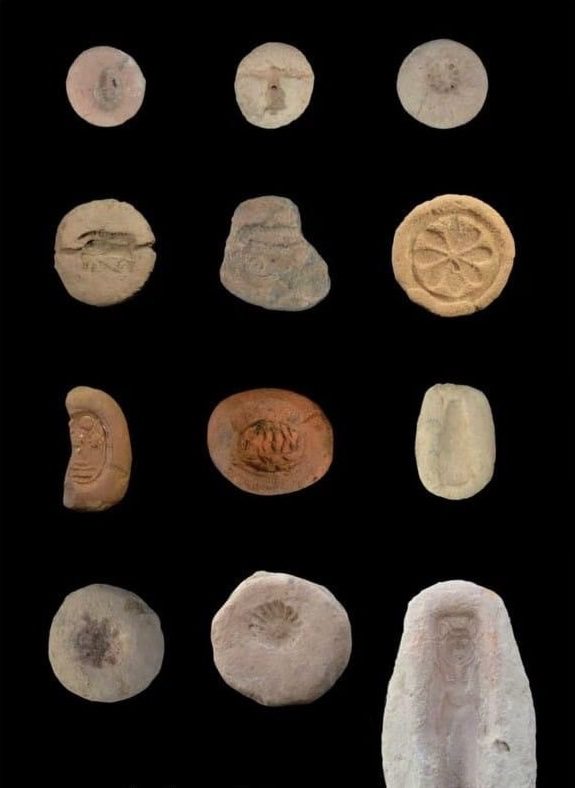
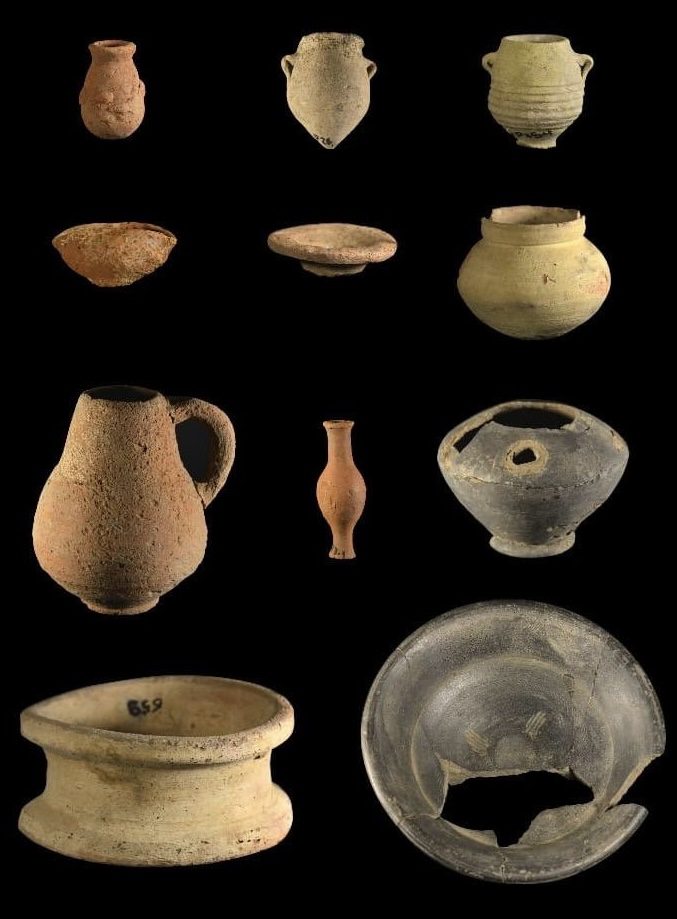
Other finds include pottery remains, faience amulets, small terracotta and limestone figurines, ostraca, votive stelae and other archaeological objects.
Together, the discoveries are helping archaeologists reconstruct both the monumental and everyday history of this part of Memphis.
Life Continued After the Temple’s Decline
Mohamed Abdel Badie, Head of the Egyptian Antiquities Sector at the Supreme Council of Antiquities, said the discoveries indicate continued human settlement in the area from the Third Intermediate Period and Late Period through the Ptolemaic and Graeco-Roman periods.
The evidence suggests that life continued in ancient Memphis even after the temple’s role as a major religious centre had declined.
Parts of the area appear to have subsequently developed into a residential neighbourhood, offering archaeologists an opportunity to examine how the landscape surrounding one of Memphis’s major religious complexes changed over time.
Egyptian-Chinese Mission to Continue Excavations
The Egyptian-Chinese mission will continue its archaeological and architectural documentation work during future seasons.
The mission is headed by Dr Reham Zaki, Supervisor of Scientific Affairs at the General Secretariat of the Supreme Council of Antiquities, and Dr Chen Jie, Deputy Director of the Shanghai Museum, with a joint Egyptian-Chinese team.
Future work will focus on further excavation and architectural documentation of the Temple of Sekhmet and its surrounding area.
Researchers hope the work will reveal more details about the temple itself while improving understanding of human settlement and changing patterns of occupation in this important part of ancient Memphis.
A Temple Rediscovered by Accident
The Temple of Sekhmet was discovered accidentally in 1959 during the construction of a house in the area, when archaeological remains belonging to the temple appeared.
Mohamed Abdel Tawab El-Hetta, an inspector of Egyptian antiquities, subsequently conducted excavations at the site during a single season between 1961 and 1962.
In 2015, archaeological elements visible on the surface were documented as part of the Ancient Memphis Site and Community Management Project.
The current Egyptian-Chinese mission marks the first archaeological excavation of the temple and its surrounding area since 1962.
Alongside excavation, the team is continuing architectural documentation with the aim of developing a more comprehensive understanding of the area, its inhabitants and the ways in which this part of Memphis changed and was reused over time.